White Tea vs Green Tea: The Real Differences (Backed by Science)
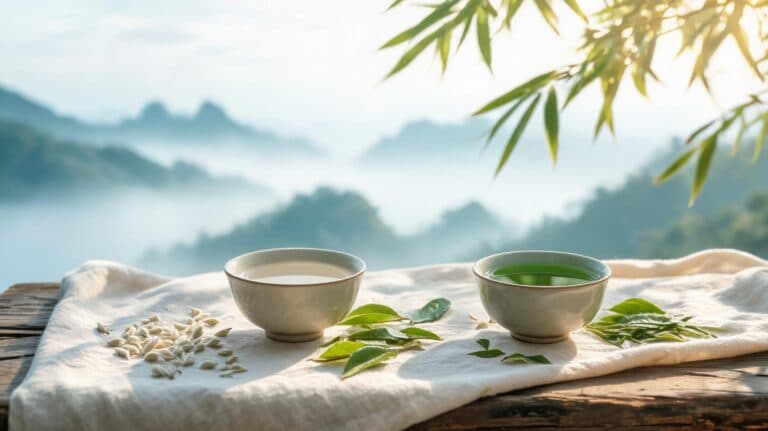
The first time I drank white tea, I thought I’d been scammed. It tasted like faintly sweet water. I brewed it like green tea—near-boiling, three minutes—and got nothing but disappointment. Turns out I was doing it all wrong. White tea and green tea come from the same plant, but they need completely different treatment.
What’s the Real Difference Between White Tea and Green Tea?
White tea and green tea come from the same plant but undergo completely different processing, resulting in distinct flavors, caffeine levels, and health compounds. White tea is barely touched. Fresh leaves get withered until they lose most of their moisture, then dried. That’s the whole process. Minimal oxidation happens naturally, but nobody heats the leaf to stop it. Green tea, on the other hand, gets a heat treatment right after plucking — steaming in Japan, pan-firing in China — to kill the enzymes that cause oxidation. This locks in a bright green color and a grassy, vegetal character that white tea never picks up.
On the surface, they look similar: dry, green-ish leaves. But the flavor gap is huge. White tea, like Silver Needle, is all soft hay, cucumber water, and a honey-like sweetness that lingers. Green tea — say a Dragonwell or a sencha — is greener in every way. Grassy, nutty, sometimes a savory umami smack. The processing difference also changes how you brew them, how much caffeine you get, and what they do for your body.
Which Has More Caffeine — White Tea or Green Tea?
White tea averages 15–30 mg of caffeine per cup, while green tea provides 30–50 mg. The exact amount depends on the tea and how you brew it. Young buds used for Silver Needle actually have more caffeine per gram than mature leaves, but the gentle 75–80°C water used for white tea extracts caffeine slower, so the final cup ends up milder. If you search “white tea caffeine vs green tea,” you’ll see half the internet claiming white tea is lower, and the other half saying it’s higher. Both sides are right, depending on the tea and the steep. In Japan, gyokuro can reach 50 mg, while a delicate Silver Needle falls around 15 mg.
My rule of thumb: if you want a gentler lift, brew a White Peony at 75°C for 3 minutes. If you want a sharper, more alert buzz, go for gyokuro or matcha—green tea that’s shade-grown and packs a punch. I’ve measured my own reaction: a morning cup of jun Chinary green tea gets me typing faster, but white tea leaves me calmer without any jitter. The numbers back that up—the amino acid L‑theanine, which smooths out caffeine’s edge, is abundant in both, but white tea’s lower total caffeine makes the calm more pronounced.
What Do Health Studies Say About White Tea vs Green Tea?
White tea contains more polyphenols, but green tea’s catechins show stronger, better-proven health benefits. A 2017 analysis in Food Chemistry found that some white teas retained up to 20% more total polyphenols than green teas processed from the same leaf batch. White tea’s minimal processing can preserve up to 20% more polyphenols than green tea, but green tea’s catechins are better absorbed by the human body. That matters more than the raw numbers on a lab report. Green tea’s star catechin, EGCG, has been linked in dozens of studies to improved heart health, metabolic rate, and reduced inflammation — solid human trials, not just petri dishes.
When comparing white tea benefits vs green tea for skin aging or blood sugar, the evidence tilts green. A 2019 meta-analysis in the Journal of Nutrition associated 3 or more cups of green tea daily with a 28% lower risk of heart disease. White tea shows promise in early studies, especially for oral health and skin cell protection, but it hasn’t caught up yet in long-term research. That doesn’t mean white tea is inferior; it just hasn’t been studied as aggressively. I drink both depending on how my stomach feels. White tea’s soft tannins mean it rarely causes any discomfort, even on an empty stomach. Green tea can bite back if oversteeped.
How Should You Brew White Tea and Green Tea for the Best Flavor?
Brew white tea at 75–80°C for 3–4 minutes, and green tea at 80–85°C for 2–3 minutes to avoid bitterness. If you’ve got a Silver Needle, go even lower: 70°C for 5 minutes yields a syrupy sweetness with zero bitterness. Oversteep and you get astringent, bitter, “I hate green tea” face. Using water that’s too hot is the fastest way to ruin both. I use a variable‑temperature kettle, which cost me $35, and it’s the best tea investment I’ve made.
And if you’re curious about gongfu brewing: white tea loves flash steeps (10–15 seconds) with near‑boiling water. The density of the buds means you can push it harder than you’d think. My favorite Bai Mudan can take six infusions that way. Green tea rarely works well with gongfu — it just gets bitter unless you’re extremely precise. So for simplicity, stick with western‑style brewing until you get a feel.
So, White Tea vs Green Tea — Which Should You Drink?
Choose white tea for a gentle, forgiving cup; choose green tea for bold flavor and robust health research. There’s no single best. I reach for white tea in the afternoon when I want to wind down without going caffeine‑free, and green tea in the morning when I need my brain to boot up faster. The best white tea for beginners is Bai Mudan (White Peony) — it’s forgiving, affordable (often $10–18 per 100g), and sweet enough to convert anyone who thinks tea is always bitter.
Last week I brewed a 2024 Silver Needle at 75°C, forgot it on the counter for five minutes, and came back to a cup that was still golden and sweet, not a trace of bite. That’s what I love about white tea. It doesn’t punish you. Green tea, on the other hand, demands more attention — but the grassy, nutty high note you get from a perfectly steeped Dragonwell is its own reward.
Still not sure which way to go? Let our AI Tea Doctor help. It asks a few simple questions about your taste and mood, then recommends a white tea or green tea that actually fits you. Or take the Five Elements quiz if you’re curious about how seasonal drinking aligns with your body.