Where to Buy Keemun Tea That Actually Tastes Like Keemun
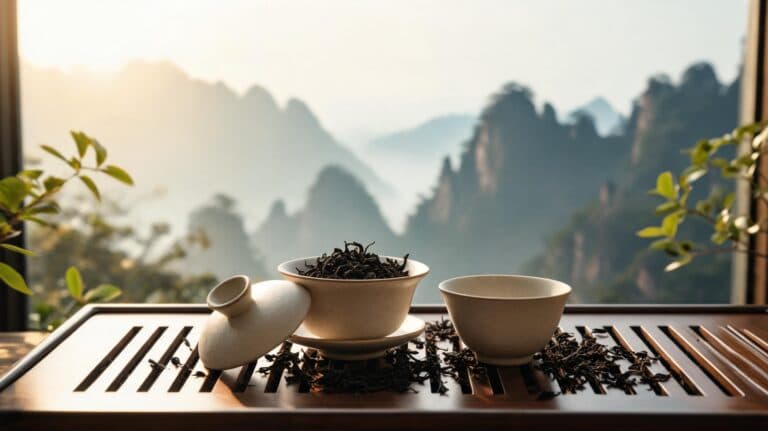
The first time I brewed real Keemun, I used 5 grams in a 100ml gaiwan at 90°C. The smell came up like someone had poured honey into a pine fire. Thirty seconds later, the liquor was ruby-red and tasted like unsweetened cocoa with a whisper of smoke. That was 2019, in a tea market in Huangshan. Since then, I’ve bought dozens of bags labeled Keemun, and fewer than half were the real thing.
If you want to buy Keemun tea that actually smells like that, you need to know what to look for. Most of what’s sold as Keemun is a blend. I’ll explain the taste and the warning signs, then point you to better sources.
What Does Real Keemun Tea Taste Like?
Real Keemun black tea has a base note of unsweetened cocoa and dark honey, finished with a pine smoke that fades by the third steep. Real Keemun leaves are small, glossy black strips with a faint smell of dried plum and smoke before you even rinse them. If the dry leaf looks like broken pencil lead, it’s a lower grade or a blend.
First steep: smoke and honey. Second steep at 95°C for 20 seconds brings out a malty note. Third steep gets sweeter, like roasted sweet potato skin. The aftertaste is dry, not astringent. Like having eaten a square of dark chocolate. This is not a bold, punchy black tea. It’s quieter, more floral in the finish.
One thing people miss: real Keemun tea is often less intense than cheap breakfast blends. That softness is part of why it gets blended. Blenders add body with Assam or Ceylon, and the honey note disappears into generic malt. You won’t find that honey note in a bag that just says “Keemun flavor.”
Why Is Most ‘Keemun’ You Buy Actually a Blend?
Most Keemun sold in Western shops is blended with cheap Assam or African black teas because pure Keemun yields are small and the leaves are delicate. Pure Keemun from Qimen County in Anhui costs $20–$45 per 100 grams for honest Mao Feng grade, while most blends sell for $8–$12 per 100 grams. That price gap is the first warning sign.
Another sign: the label says “Keemun” but the origin is just “China” or “black tea blend.” Authentic Keemun black tea should name Qimen County, and usually a village like Likou or Guichi. If the seller can’t tell you the harvest season, it’s probably not pure.
Then there’s the taste test. Brew it at 90°C for 30 seconds. A real Keemun smells like a campfire someone put out with honey. A blend gives you warm toast or raisins instead. The smoke should be there from the first sniff. If it’s not, don’t let anyone tell you Keemun is supposed to taste plain.
Where Should You Buy Keemun Tea Without Getting Burned?
Buy from a seller that lists the harvest year and the specific grade, Keemun Mao Feng or Keemun Hao Ya A, because that level of detail is hard to fake. If you’re going to buy Keemun tea online, skip Amazon and eBay unless the seller clearly states the grade and harvest season.
I’ll tell you where I buy Keemun tea now: from a small family operation near Qimen, or from Hou Tea’s selection when I want it fast. Hou Tea’s Keemun Mao Feng is one of the few that consistently passes my blind taste test. You want the Mao Feng grade for daily drinking. Hao Ya A is sweeter and more delicate, but it costs more and shows up later in the year.
If you’re trying to figure out where to buy real Keemun tea, start with a 50-gram sample from a specialist. Not 100 grams. Real Keemun changes a lot with water temperature, and you need a few sessions to figure out how you like it. Start at 90°C for 20 seconds. If the smoke is too faint, go to 95°C. Bitterness means back down to 85°C.
One seller I trust lists the harvest date down to the week. That’s rare. Most will just say “2024 spring.” Both can be honest, but the more specific the date, the more likely the leaves came from a single patch rather than a warehouse mix.
How Do You Brew Keemun So the Smoke Doesn’t Disappear?
Brew Keemun at 90°C for no more than 30 seconds the first time, because the smoke and honey compounds are delicate and longer steeps pull out bitter malt. You can always go hotter or longer later.
I use a gaiwan or a small teapot. 5 grams per 100ml is my baseline. If you’re using a Western mug with an infuser, use 3 grams and 240ml of water at 90°C. Steep for 45 seconds. That gives you a softer cup without losing the smoke.
Most people ruin Keemun by using boiling water. It doesn’t taste bad, but the honey note turns flat. Try 90°C first. If the smoke is too faint, go to 95°C for the second steep. If it gets bitter, back down to 85°C. The leaf tells you what it wants.
Real Keemun holds up for five or six steeps in a gaiwan. A blend usually falls apart after two. That’s another way to tell what you bought.
The last time I bought a bag labeled “Keemun” from a grocery store, the leaves were broken into crumbs and the brew tasted like warm toast. Not bad, but not Keemun. If the smoke and honey aren’t there in the first steep, you’ve got a blend.
Not sure which black tea suits you? Take our Five Elements quiz or ask our AI Tea Doctor — it takes 30 seconds and gives you a personalized pick, including a real Keemun if that’s your match.