What Chinese Tea Culture Gets Right About Living Well
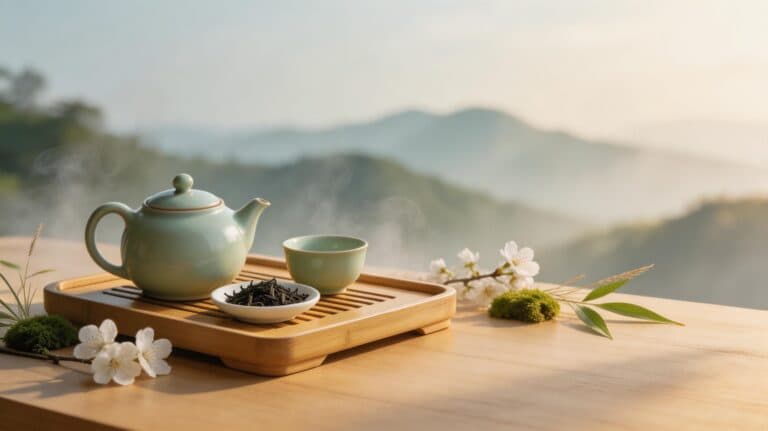
A quiet table, a kettle just off the boil
Steam fogged the window of a small tea room in Hangzhou while a farmer I had just met tapped the lid of a gaiwan with one fingernail, listening to the water more than watching it. Outside, it was early spring and still cold enough for jackets. Inside, he brewed a fresh Longjing at about 80°C for maybe 15 seconds, poured it into little glasses, and told me the tea was no good if the mountain had been too dry that week.
That stuck with me.
People often talk about Chinese tea culture as taste, history, technique. All true. But I think the deeper lesson is simpler and harder: tea trains you to live with the world as it is, not as you wish it would be. Rain matters. Heat matters. Your mood matters. The cup changes with all of it.
Tea begins with weather, not control
One reason Chinese tea culture feels so grounded is that it starts with season and place. Tea is agricultural before it is anything else. A high mountain oolong from spring will not taste like the same cultivar picked in late autumn. A Yunnan black tea after weeks of heavy rain can lose some lift and sweetness. A dry, warm spring in Zhejiang can push green tea to come early, sometimes by more than a week.
That sounds obvious, but most of modern life teaches the opposite. We expect strawberries in winter. We expect coffee to taste the same every morning. Tea pushes back. Good tea asks you to notice conditions instead of forcing sameness.
In my experience, this is one of the healthiest parts of tea culture. It makes attention feel normal. Not as a self-help project. Just as a way of being less numb.
The cup reflects the hillside
I have tasted Tieguanyin that smelled like lilac and warm cream one season, then leaned greener and sharper the next year from the same area. I have had sheng pu-erh that opened with bitter herbs, then turned sweet as sugarcane after rainier storage. Tea can be humbling like that. You stop demanding perfection from every batch and start appreciating character.
And that shift matters outside tea. A life built around total control is brittle. Tea culture is full of small reminders that change is normal.
Brewing teaches restraint
A lot of Chinese tea practice is really practice in not overdoing things.
Use water that is too hot on a delicate green tea and you get bitterness, asparagus, a flat, cooked note. Brew a roasted yancha too cool and it can feel dull, almost sleepy. Push shou pu-erh for five minutes in a mug and the cup gets muddy fast. The point is not technical purity for its own sake. The point is learning what enough feels like.
For example, I usually brew Longjing around 75 to 85°C. Huangshan Maofeng, often a little lower. Wuyi oolong is happier near 95 to 100°C, with short steeps at first, maybe 8 to 12 seconds in a gaiwan. Those choices are practical. But they also train your hand and mind toward moderation. Less force. Better result.
That idea runs through a lot of Chinese thought. Don’t push every moment to the limit. Don’t squeeze flavor out of leaves as if extraction were a moral victory. Let the tea say what it has to say. Then stop.
Why gongfu brewing feels different
I prefer gongfu brewing for many teas because it slows me down in a useful way. A small pot, a fair pitcher, a series of short infusions. It asks for your attention, but not in a stiff, ceremonial way. More like cooking in a home kitchen with good ingredients.
You notice things. The first pour of a Dancong might smell like orange peel and toasted honey. By the fourth steep it can shift toward orchid and mineral warmth. A good rock tea sometimes leaves this cooling feeling in the throat that lingers longer than the obvious flavor. Tiny changes. Easy to miss if you are rushing.
And yes, grandpa style brewing has its own charm. Leaves in a glass, hot water added as you go. Honest. Direct. I drink that way all the time with green tea. Chinese tea culture has room for both, which I like.
Tea makes ordinary time feel alive
There is a line I have heard in different forms from tea people in China: drink tea according to the day. Not according to a fixed rule. According to the day.
Some afternoons call for a high-aroma oolong that lifts the room. Some rainy evenings want aged white tea simmered gently until it smells like dates and old wood. In summer, a grassy green tea in a tall glass can feel exactly right. In winter, I reach for hong cha with cocoa and sweet potato notes, or a mellow shou pu-erh that tastes like damp forest soil after the first rinse falls away.
This is harmony in a very practical sense. You pay attention to temperature, season, body, mood. You adjust. That is a lot closer to wisdom than the hard-edged productivity logic many of us live with.
A 2022 review in Molecules looked at tea polyphenols and reported links with lower markers of oxidative stress and inflammation in several human studies. I’m not bringing that up to turn tea into medicine. I just think it is interesting that a habit built around slowing down also happens to be good for the body in ways researchers can measure.
Objects matter, but not how you think
People new to Chinese tea sometimes get intimidated by teaware. Yixing pots. Chaozhou stoves. Porcelain cups so thin they feel like eggshell. Some of it is beautiful. Some of it is expensive. A handmade Yixing teapot can run from $80 to several hundred dollars, and antique pieces can go much higher.
But the lesson of tea culture is not that you need fancy stuff. It is that tools shape attention. A plain white gaiwan for $12 can teach you more than an expensive pot you are afraid to use. A rough clay cup can make you slow down because it warms differently in your hand.
I have had unforgettable tea from refined setups, and from chipped cups on plastic tables at farms. The best sessions usually had one thing in common: the person brewing cared about the leaves and the people drinking them.
Hospitality without performance
That is another part of Chinese tea culture I admire. At its best, it is generous without being showy. You pour for the other person first. You notice whose cup is low. You keep the conversation loose. Silence is allowed too.
Tea gives people something to do with their hands while the mind settles. I have seen difficult conversations soften over a pot of white tea. I have seen old friends sit for twenty minutes saying almost nothing, just listening to water and swallowing slowly. No one tried to turn the moment into content.
The downside: tea can become another form of chasing
Of course, tea culture can go sideways. People get obsessed with rare mountains, old trees, tiny production lots. Prices can get silly fast. Good Longjing can easily hit $30 to $60 per 100 grams, and famous pre-Qingming lots go much higher. Some pu-erh markets are full of status anxiety dressed up as taste.
I think that misses the point.
The older tea drinkers I trust most are rarely the loudest about prestige. They care about balance in the cup. They care about whether a tea feels settling, or bright, or honest about what it is. They are happy to drink something simple on a Tuesday if it suits the weather. That attitude is part of the lesson too. Harmony is hard to find if every cup is a trophy hunt.
What tea teaches about living with nature
After enough years with Chinese tea, I think the lesson is not “go live in the mountains” or “buy traditional things.” It is more intimate than that. Notice small changes. Respect limits. Work with season and mood instead of pretending they do not exist.
Tea will not fix a rushed life by itself. But it can interrupt it. You heat the water. You warm the cup. You wait 10 seconds longer because the leaves are still opening. The whole practice is made of little acts of adjustment.
That farmer in Hangzhou was right to care about a dry week on the mountain. The tea in my cup was never separate from the weather outside. I think that is the part Chinese tea culture keeps trying to teach us, quietly, every time steam rises from the kettle and disappears into the air.