Tieguanyin vs Da Hong Pao: What’s the Real Difference?
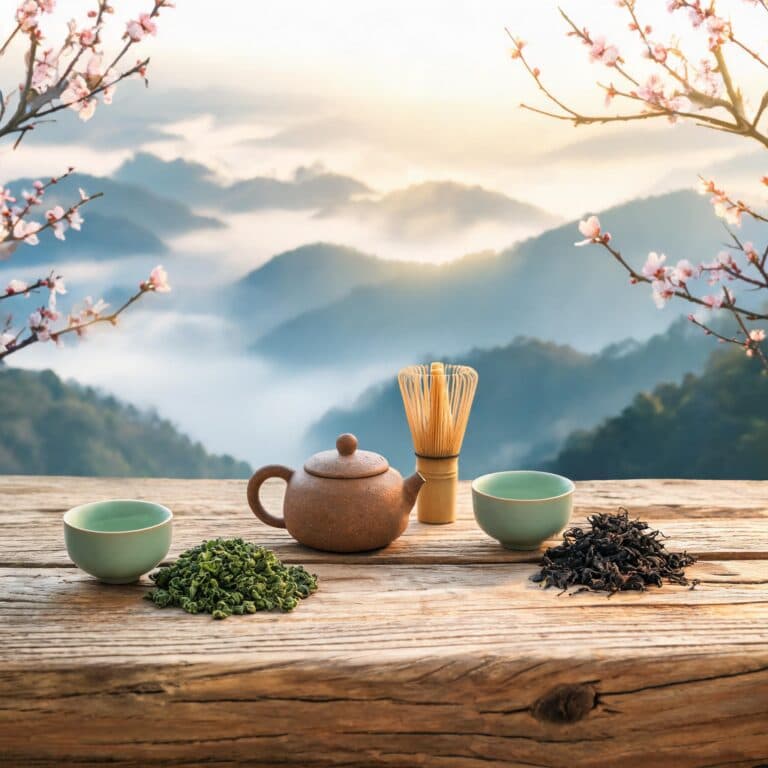
The first time I tasted Tieguanyin, I thought someone had snuck flowers into the cup. It was delicate, orchid-like, and had a slippery sweetness that coated my mouth. A week later, I tried Da Hong Pao and it was like a different planet—roasted nuts, dark chocolate, a rocky mineral smack that clung to the back of my throat. That’s the tieguanyin vs da hong pao tension in a nutshell: both are oolong, but they live at opposite ends of the spectrum.
Tieguanyin is a lightly oxidized, floral oolong from Anxi; Da Hong Pao is a heavily roasted, mineral-driven oolong from the Wuyi cliffs. That’s the shortest way to describe the difference. Everything else—flavor, brewing, price—flows from there.
What’s the Real Difference Between Tieguanyin and Da Hong Pao?
It’s not just about roast level. Tieguanyin (Iron Goddess of Mercy) originates in Anxi, Fujian, and the modern style is often lightly oxidized and barely roasted—sometimes called “green” Tieguanyin to emphasize its fresh, vegetal character. Traditional Tieguanyin gets a bit more roast, but you’ll mostly encounter the bright, floral version these days. Da Hong Pao (Big Red Robe) is a Wuyi rock tea, meaning it grows in the mineral-rich cracks of the Wuyi mountains. The leaves are thick, heavily oxidized, and roasted over charcoal, sometimes multiple times. In a tieguanyin vs da hong pao comparison, you’re comparing a tea that wants to taste like spring in a garden with one that wants to taste like a forest fire on a cliff.
What Does Tieguanyin vs Da Hong Pao Actually Taste Like?
I’ve drunk enough of both to know that Tieguanyin surprises you with its evolution. The first steep is all high notes—white flowers, maybe some green apple skin. By the third steep, it rounds out with a buttery texture and a hint of sweet corn. Some versions have a slightly astringent edge if oversteeped. A 2019 study in the Journal of Food Science found that lightly oxidized Tieguanyin contains more linalool (a floral-smelling compound) than its roasted counterparts, which explains the intense floweriness. Some versions, like traditional charcoal-roasted Tieguanyin, dial back the flowers and bring forward caramel and baked pear notes—a kind of bridge to Da Hong Pao territory.
Da Hong Pao doesn’t do subtle. Right away you get heavy roasted grain and a peculiar minerality that tea nerds call “yan yun” (rock rhyme). It’s almost salty, like sucking on a pebble from a campfire. The aftertaste shifts to dark chocolate or dried longan. It’s not a tea for casual sipping; it demands attention.
Which One Is Easier to Brew?
Da Hong Pao demands near-boiling water—95°C or so—to coax out its full character. If you use water at 85°C, as you might for green tea, you’ll get a thin, uninspiring cup. I’ve ruined plenty that way. Steep times in a gaiwan: start with 15-20 seconds, adding 5 seconds each round. It can take 7-8 infusions. Tieguanyin is more flexible; I brew it at 85-90°C, and it stays bright and sweet even if my water is a bit cooler. Oversteep it, though, and the bitterness slaps you. Especially the greener styles. I’ve noticed that using a thin-walled gaiwan works best for Tieguanyin because it dissipates heat quickly, preventing the leaves from stewing. For Da Hong Pao, a thicker yixing pot (if you have one) holds heat and smooths out the roast. If you’re new to gongfu brewing, Tieguanyin is the more forgiving starting point in the tieguanyin vs da hong pao match-up, but only if you watch your steep time.
Is Da Hong Pao More Expensive Than Tieguanyin?
Yes, and it’s not close. A reliable, everyday Tieguanyin can cost $15-25 per 100g. For that price, the Da Hong Pao you’ll find is almost certainly a blend—often called “Da Hong Pao style” because the original mother bushes are long gone. Genuine Wuyi rock tea, with precise roasting and a recognizable terroir, starts around $40 per 100g and can climb past $120 for premium lots. I splurged on an $80 batch once and the difference was obvious: deeper roast integration, no harsh tannins. For everyday drinking, I look for a mid-range Da Hong Pao blend around $35-50 per 100g—that’s where the roast character shines without breaking the bank. The price in tieguanyin vs da hong pao isn’t about quality—it’s about supply and production cost. Tieguanyin is easier on the wallet overall.
When Should You Pick One Over the Other?
I reach for Tieguanyin on warm spring afternoons, when I want something refreshing and fragrant without weighing me down. It’s also my go-to if I’m drinking with someone who’s new to oolong; the floral punch tends to win people over. Da Hong Pao is for colder weather, rainy evenings, or when I need a tea with some heft. Something that feels like a meal in itself. I’ve found that quality Da Hong Pao can go 8-10 steeps if the leaves are high grade. If you’re stuck on the tieguanyin or da hong pao which is better question, it helps to reframe: it’s not about better, it’s about which mood you’re catering to. I keep both stocked.
I used to think I had to choose one. Now my cabinet holds a tin of each, and my only rule is: don’t brew Da Hong Pao at a garden party.
Still torn? The Hou Tea Five Elements quiz or our AI Tea Doctor will nudge you toward the oolong (or any tea) that fits your taste now. Takes less than a minute.