The Best Tea for Inflammation? Here’s What I Drink (and Why)
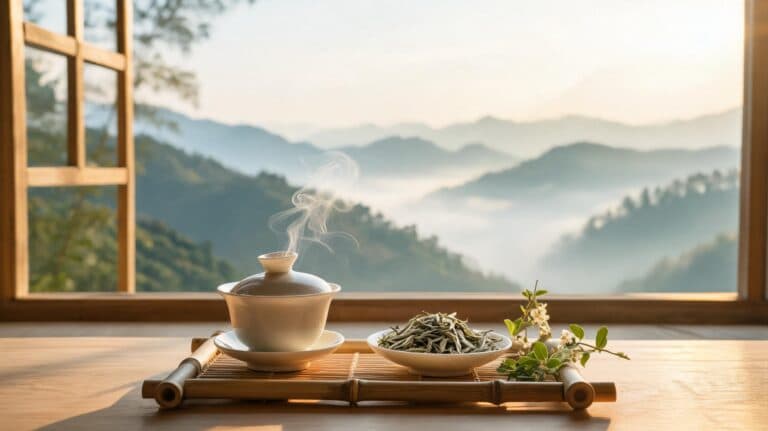
My wrist started aching after typing all day, and it wasn’t carpal tunnel. It was low-grade inflammation—that dull, stubborn sort that hangs around for weeks. Anti-inflammatories took the edge off but made me groggy. Then a tea-farming friend in Fujian told me to switch my morning drink. I haven’t looked back.
What makes a tea anti-inflammatory in the first place?
Green tea and white tea are the two best Chinese teas for fighting inflammation because they preserve extremely high levels of catechins and polyphenols. Those molecules block the signals your body uses to ramp up swelling. A 2019 study in the Journal of Nutrition found that daily white tea consumption reduced inflammatory markers by 18% after just four weeks. The key is minimal processing. Black tea is fully oxidized, which converts a lot of those delicate compounds into something else—still tasty, but less punchy for inflammation. White tea barely gets touched after plucking, so it holds onto more of the good stuff.
Which Chinese tea is the best for inflammation?
White tea—specifically Silver Needle (Bai Hao Yin Zhen)—is arguably the best tea for inflammation you can find. Its buds are covered in fine downy hairs that contain concentrated polyphenols. I brew it at 75°C for three to four minutes. The liquor is pale gold and tastes like honeydew with a whisper of hay. Even after three steeps, the anti-inflammatory activity doesn’t disappear completely. I’ve got a tin of Hou Tea’s Silver Needle that I reach for when my joints feel stiff. It’s not magic. But I can tell when I skip a few days.
What does green tea actually do to reduce inflammation?
The catechins in green tea—especially EGCG—inhibit the production of molecules that tell your immune system to attack. A 2018 trial in the Journal of Nutritional Biochemistry showed that people who drank two cups of green tea daily lowered their C-reactive protein (a key inflammation marker) by about 20% over twelve weeks. That’s not a small shift. For the best tea for inflammation on a budget, a good Longjing or Mao Feng is hard to beat. I steep mine at 80°C for two minutes exactly. Any longer and bitterness creeps in. Any hotter and you torch the catechins. Using water above 85°C can destroy up to 30% of green tea’s catechins within the first minute of steeping.
What if green tea tastes too grassy or bitter?
I get it. Not everyone loves vegetal notes first thing in the morning. If you want the best tea for inflammation that doesn’t taste like a lawn, try a lightly oxidized oolong like Tie Guan Yin. Oxidation lowers the raw catechin count, but other polyphenols—like theaflavins—still help dial down inflammation. The taste is floral, almost creamy. I brew it at 90°C for 30 seconds in a gaiwan and re-steep six or seven times. The anti-inflammatory effect is gentler than white tea but much more drinkable if you’re sensitive to bitterness. Honest trade-off.
Can pu-erh or aged white tea help with inflammation?
Yes, but through a different door. Shou pu-erh goes through microbial fermentation. That process creates theabrownins—compounds that, according to a 2021 Antioxidants paper, can modulate gut inflammation by feeding beneficial bacteria. Aged white tea (3+ years old) also shifts. Its catechins mellow, and polysaccharides increase, giving it a thicker, sweeter taste and a slightly different anti-inflammatory profile. Neither is as fast-acting as fresh Silver Needle. But for daily drinking over months, they work in the background. I drink a 2017 Shou Mei when I want something earthy and warm. It costs around $45 per 100-gram cake—decent value considering you can brew it more than ten times.
How should you brew these teas for maximum anti-inflammatory benefit?
Lower temperatures and shorter steeps always protect the delicate antioxidants. For white tea, stick to 70–75°C and steep 3–4 minutes. For green tea, 80°C and 1.5–2 minutes. If you’re using a gongfu approach, flash steeps of 10–20 seconds in a small pot work beautifully. Don’t dump leaves after one infusion. The first steep gives you maybe 40% of the total catechins, the second and third the rest. After that, what’s left is mainly amino acids—still relaxing, but not doing much for inflammation. And never use boiling water on green or white leaves. It’s the quickest way to destroy what you came for.
Inflammation isn’t something you fix with a single cup. It’s a slow burn, and drinking these teas daily is like throwing a little cold water on it each time. Some days I want bright and crisp Silver Needle. Other days I want the roasted-nut comfort of an oolong. Both work. I just keep the temperature low and the habit steady.
Not sure which anti-inflammatory tea suits your taste? Take our Five Elements quiz or ask our AI Tea Doctor—it takes 30 seconds and gives you a personalized pick based on how you actually live.