Tea for Coffee Drinkers Switch: Bold Chinese Teas That Satisfy
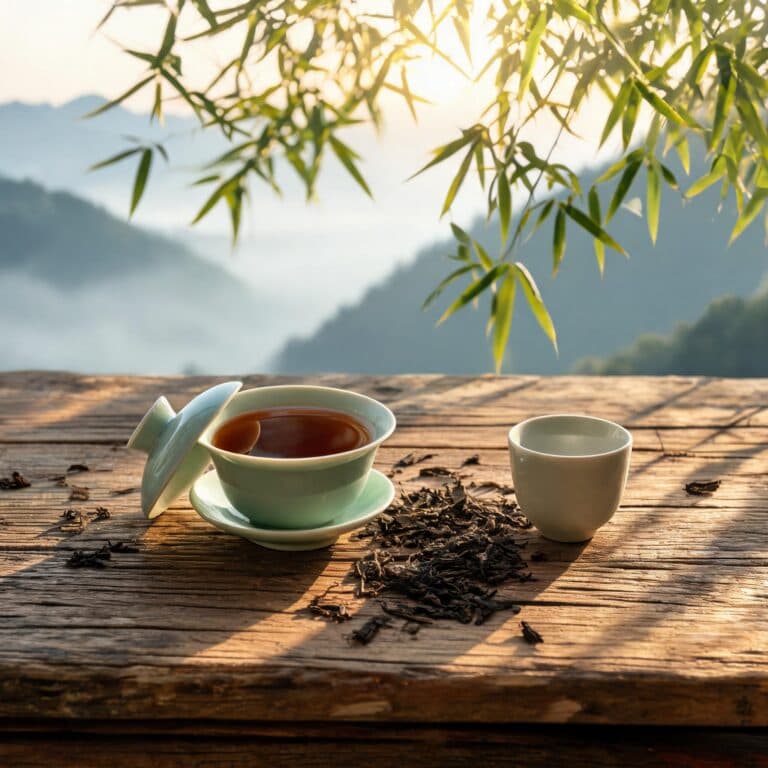
The first time I handed a cup of Lapsang Souchong to a die-hard espresso drinker, he squinted at it like I’d served him campfire water. Then he took a sip and said, “Okay, that’s not tea. That’s something else entirely.” I knew I’d found one of the tea for coffee drinkers switch moments that actually works.
Why Do Most Teas Let Coffee Drinkers Down?
Most tea is too polite. It whispers where coffee shouts. A delicate white tea or a lightly steamed green has almost no body, no roast, and a caffeine hit that leaves a coffee drinker yawning. The mistake people make when switching from coffee to tea is reaching for anything labeled “tea”—and getting a watery cup that tastes like it’s apologizing for existing.
The structural mismatch is simple: coffee is heavy, oily, and roasty; most tea is none of those things. You need teas that bring weight, smoke, earthiness, or a deep malt backbone. Fortunately, Chinese tea culture has spent centuries producing exactly that kind of brew.
What’s the Best Tea for Coffee Drinkers Switch?
The best tea for coffee drinkers switch isn’t one single tea—it depends on what you love about coffee. If it’s dark roast intensity, go for a heavily oxidized black tea with smoke. If it’s the thick mouthfeel and lingering aftertaste, ripe pu-erh will feel like home. And if you miss the ritual of grinding beans and timing a shot, a concentrated gongfu brew of roasted oolong gives you a deep, hands-on experience.
I’ve watched dozens of coffee loyalists try these five teas. The ones who stick with tea choose from this list.
5 Bold Chinese Teas That Actually Hit Like Coffee
Lapsang Souchong
Smoked over pinewood, this black tea smells like a campfire in the best possible way. The first sip is all smoke and leather, then it settles into a roasted-sweet finish that lingers. I brew it at 95°C (203°F) with 5g per 100ml, and steep for 30 seconds—the liquor comes out dark as cola. Lapsang Souchong’s smoky, campfire aroma has converted more coffee loyalists than any other tea I’ve served. A good one costs $15–25 per 100g and lasts multiple steeps.
Ripe Pu-erh
If black coffee’s weight is what you miss, ripe pu-erh delivers. Its deep, earthy broth—think damp forest floor, dark chocolate, and a trace of vanilla—coats your mouth exactly like a heavy French press brew. Ripe pu-erh’s earthy richness and thick body make it the closest thing to black coffee in the tea world. I push it hard: 100°C water, a 10-second rinse, then 45-second steeps. A 2020 study in Food Chemistry identified both theanine and GABA in ripe pu-erh, compounds linked to calm focus without the jitters. A quality cake runs $30–60 per 100g, but 5g yields 8–10 flavorful infusions, so it’s surprisingly economical.
Dark Roasted Oolong (Wuyi Yancha)
Wuyi rock oolongs like Da Hong Pao or Shui Xian get a heavy charcoal roast that pulls out notes of toasted grains, caramel, and wet stone. The first time I brewed a heavily roasted Shui Xian for a cold-brew concentrate guy, he said it reminded him of a washed Ethiopian coffee—bright minerality under a roast curtain. Brew 5g at 95°C for 25 seconds, adding 5 seconds each steep. The roast depth in a Wuyi yancha cuts through milk or sweetener without losing its structure, which is exactly what a coffee drinker expects. A solid entry-level yancha costs $20–35 per 50g.
Yunnan Black Tea (Dian Hong)
Yunnan’s fully oxidized black teas are malt bombs. Thick, chocolaty, and just bitter enough to feel familiar. No smoke, no funk—just a clean wallop of malt and cocoa. I use boiling water and steep 4 minutes Western-style for a mug that stands up to milk and sugar. Yunnan black tea delivers a bold, malt-forward cup that coffee drinkers recognize immediately, without any earthy or smoky distractions. Expect to pay $12–20 for a good Dian Hong per 100g.
Aged Sheng Pu-erh
Young sheng pu-erh can be brutally bitter—too much for most coffee refugees. But a well-aged sheng (10+ years) transforms into something woodsy, resinous, and complex, with a lingering sweetness that reminds me of a natural-process coffee. It’s the most expensive option here ($60–150+ per cake), but if you’re a specialty coffee nerd chasing terroir, this is your rabbit hole. Brew 7g in a 100ml gaiwan at 98°C, flash rinse, then 20-second steeps.
How Should You Brew Tea to Replace Coffee?
Forget the “one teaspoon per cup” rule. Coffee drinkers need a higher leaf-to-water ratio and hotter water to get that full-body punch. I use 5g of leaf per 100ml of water as a starting point—roughly five times what a typical teabag holds.
Water temperature matters: bring it to 95–100°C for blacks, pu-erhs, and roasted oolongs. Don’t be afraid to push steep times. A 45-second first steep on ripe pu-erh gives you immediate depth, and you can dial back if it gets too intense. Gongfu brewing isn’t mandatory, but it lets you control exactly how strong each cup hits—and it satisfies the ritual itch that pulling a shot of espresso scratches.
One More Thing Before You Switch
If you’re switching from coffee to tea, expect a different kind of caffeine delivery. Coffee spikes fast and crashes. A heavily-leaved gongfu session of ripe pu-erh might deliver 80mg of caffeine across multiple small cups, but it releases gradually thanks to L-theanine. You get alert without the jangle. My mate who now drinks two pots of Yancha every morning says it’s like “clean energy”—he still gets his buzz, just without the 11am wall.
Last week I brewed a 2018 ripe pu-erh for a friend who swore he’d never give up his morning espresso. He finished the pot in silence, then said, “I could get used to this.” That’s the tea for coffee drinkers switch that sticks.
Not sure which bold tea to try first? Hou Tea’s AI Tea Doctor asks four quick questions and matches you with a tea that fits your coffee-loving taste. Or browse our collection of dark, roasty Chinese teas—no wimpy brews here.