Tea as a Way of Life in China: Living With the Seasons
A kettle starts the whole room
At dawn in Hangzhou, I once watched an older man rinse a glass with hot water, drop in a pinch of longjing, and wait. That was all. No performance. No speech about mindfulness. Just steam on the window, the faint smell of chestnut from the leaves, and the way he paused before the first sip as if the weather itself had joined him at the table.
That small moment has stayed with me longer than some famous tea tastings. I think that is because tea in China is often less about collecting rare things and more about learning how to live with the day in front of you. The rain matters. The season matters. Your body matters. Even the cup you reach for seems to matter.
People often talk about Chinese tea as a drink. It is that, of course. But in practice it becomes a habit of paying attention, and that habit can shape a whole life.
Tea follows the season, not your mood alone
One thing I love about Chinese tea culture is how closely it tracks the year. Spring green teas are prized for a reason. Fresh longjing, bi luo chun, or anji baicha can taste almost startlingly alive, with notes of bean shoots, orchids, or sweet peas. Brew longjing at about 80°C for 2 minutes in a glass and you get that soft, nutty sweetness. Use boiling water and you can flatten it fast.
Summer shifts the mood. People still drink green tea, sure, but jasmine tea starts making extra sense to me then, especially grandpa style in a tall glass. It is cooling in feeling, light on the palate, and easy to keep topping up through a hot afternoon.
Autumn is where my own preferences get louder. Give me yancha from Wuyi or a good roasted tie guan yin. Something that tastes like rock, orchid, toasted grain, maybe a little cinnamon bark if the roast is done well. Brew a strip-style yancha around 95°C for 15 to 20 seconds gongfu, then add time slowly. It fits dry air and cooler evenings in a way that spring green tea does not.
Winter asks for comfort. Ripe pu-erh. Heicha. A red tea with a honeyed, warming cup. I know some people drink the same tea all year and that is fine, but in my experience the old seasonal logic still holds up. Your mouth wants different things in January than it wants in April.
Harmony with nature is practical, not dreamy
“Living in harmony with nature” can sound soft and vague in English. In Chinese tea culture it is often more concrete than that. You drink what the climate supports. You notice how your body responds. You accept that a tea picked before Qingming costs more because those early leaves are scarce and tender. In some years, true pre-Qingming longjing can easily run from a few hundred dollars to well over $1,000 per kilo, and the price is tied to weather as much as reputation.
That connection to weather is not abstract on the farm. A cold spring slows growth. Too much rain can dull intensity. A few sunny mornings at the right time can make a tea smell sweet and clear in the cup. I have stood in tea fields where growers were watching the sky more closely than their phones. Tea teaches that control is limited. You work with conditions. You do not command them.
And that lesson travels back to the teatable. Some days a tea opens quickly. Some days it feels shut down. Water changes things. Your mood changes things. I have brewed the same dancong in the same gaiwan on two different rainy mornings and gotten a softer, more honeyed cup one day and a sharper floral edge the next. Part of tea culture is accepting that the leaf is alive enough to resist your script.
Daily tea habits can change how you move through time
There is also the matter of pace. Tea slows people down, but not always in the way lifestyle books like to describe. It is not that every session becomes a spiritual event. Most do not. A lot of tea drinking in China is ordinary. Office thermos tea. A shopkeeper refilling a mug all afternoon. Someone bringing out a gaiwan after lunch because guests showed up.
Still, even ordinary tea asks for small acts of attention. Heat the water. Smell the lid. Watch the leaves loosen. Taste the first steep, then the second. You begin to notice change in minutes instead of rushing past it. That is a different way of being with time.
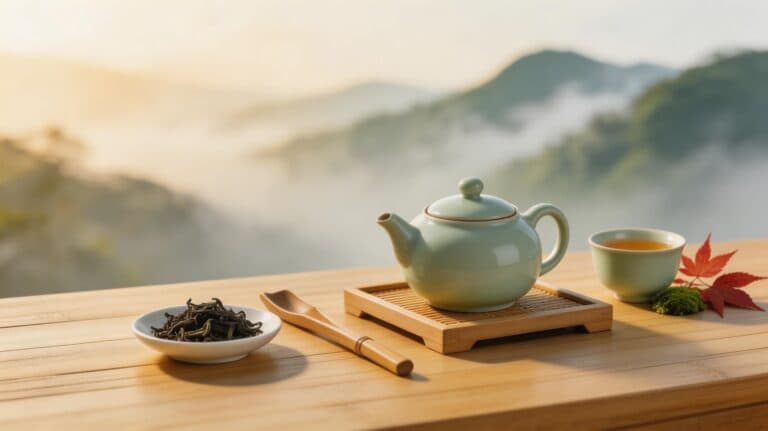
I think this is one reason tea has lasted so long as a daily practice. It fits real life. You do not need a mountain view and a bamboo tray. A jar of jasmine pearls on a desk works. So does a $15 porcelain gaiwan and a kettle that can hold 90°C. Good habits do not need fancy props.
The cup connects place, people, and memory
Tea in China is also social in a quiet way. Meals often end with tea. Visits begin with tea. Business can circle around tea for an hour before anyone gets to the point. The drink creates a shared rhythm, and that rhythm has its own kind of respect built into it.
But I do not want to make this sound too polished. Tea can be casual to the point of mess. Stained cups. Leaves in the mouth. Cheap local tea poured from a thermos at a train station. Some of my favorite tea memories are like that. One Yunnan black tea I drank roadside cost about 20 RMB for the pot, and it tasted like warm bread crust with a thin line of cacao. Nothing fancy. Very good.
Place stays in the cup too. A Phoenix oolong does not taste like a Wuyi rock tea. A green tea from Sichuan does not move like one from Zhejiang. Soil, altitude, processing style, local habit, they all leave fingerprints. This is where tea starts to feel less like a product and more like a record of where it came from.
There is wisdom in repeating simple things
Chinese tea culture has books, etiquette, and a lot of history behind it. But honestly, the part that feels most alive to me is simpler. Repeating a small act every day changes how you see things. You start noticing wind. Dryness in the air. The way one tea suits breakfast and another belongs to late evening. A clay pot slowly darkens from use. Your hand learns the weight of a full kettle without thinking.
That kind of knowledge is humble. It does not announce itself. And it is not about being pure or disciplined. Some days you overbrew the green tea and it gets a little bitter. Some days the water is off. Some days you just need ripe pu-erh because the weather is cold and your head feels noisy.
There is research behind some of tea’s effects too, though I would not reduce the whole practice to health claims. A 2022 review in Nutrients found regular tea intake was linked with better cardiometabolic markers in several population studies. Fine. Useful. But tea’s deeper value is harder to chart. It gives shape to a day.
If you want to try building that habit, start with one tea for one part of the day. Maybe a green tea at 80°C in the morning, steeped for 90 seconds in a glass. Maybe a roasted oolong after dinner, brewed gongfu at 95°C in short rounds. Live with it for a week. See what starts to feel natural. And if you want help picking one that fits your weather and your taste, you can ask our AI Tea Doctor. It is handy for narrowing the field.
Tea as a way of living, not a hobby shelf
I think this is the heart of it. Tea in the Chinese sense is not only about knowing names, buying rare cakes, or learning the right words. It is a daily way of adjusting yourself to season, place, company, and mood. Less domination. More listening.
The old man in Hangzhou finished his glass, topped it up, and looked out at the gray street for a while before saying anything at all. The leaves had sunk by then. A few were still turning slowly in the hot water.