Tea and the Five Elements: A Gentle Guide for the Curious
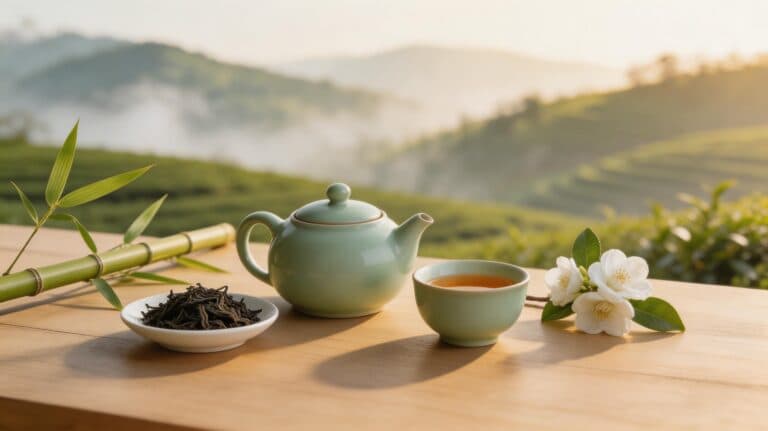
A bowl of tea on a rainy afternoon
The first time I saw a tea table arranged around the five elements, it was raining hard enough to blur the shop windows. A small pot of shou pu-erh sat beside a clay cup, a tiny brass incense holder, and a sprig of dried osmanthus. Nothing felt fussy. It felt calm, almost practical, like someone had made a place for the weather inside the room.
That is how I like thinking about the five elements and tea. Not as a grand theory you have to memorize, but as a set of old Chinese ideas that helps people notice balance, season, body, and mood. Wood, Fire, Earth, Metal, and Water are the five. Tea has lived with these ideas for a long time, sometimes in medicine, sometimes in philosophy, sometimes in tea writing that reads more like poetry than instruction.
And yes, some of it is symbolic. That does not make it fake. Symbolism can be a useful way to pay attention.
What the five elements mean in tea
In Chinese thought, the five elements are less about literal stuff and more about patterns. Wood suggests growth and movement. Fire means warmth and rising energy. Earth feels centered and nourishing. Metal is clarity, structure, and a dry, clean finish. Water is depth, stillness, and flow.
Tea drinkers use these ideas in a few different ways. Some pair teas with seasons. Some match a tea to a time of day or a mood. Some use the elements to describe how a tea feels in the body, which is subjective but often surprisingly accurate. I have heard seasoned tea friends describe a spring green tea as “wood moving upward,” and honestly, I understood exactly what they meant after one sip.
There is no official chart that every tea lover follows. Different schools explain the elements differently, and modern tea shops often borrow the language loosely. That is fine. Tea culture has always been a mix of tradition and personal interpretation.
Wood, Fire, Earth, Metal, Water in the cup
Wood: green, growing, a little restless
Wood feels like early spring. Fresh green teas often fit here, especially lightly steamed or pan-fired styles with a grassy edge, bean-sprout sweetness, and a feeling of lift. A good longjing brewed at 80 to 85°C for about 45 seconds can taste like chestnut skin, sweet peas, and a soft vegetal note that seems to rise after the swallow.
I think of Wood teas as teas that want space. They can turn dull if you overbrew them. The downside is obvious: they ask for attention.
Fire: warmth, roast, motion
Fire shows up in roasted oolongs, darker teas, and anything with a warming, toasty character. Think tieguanyin that has seen the roaster, or a yancha with mineral smoke and roasted almonds. Brewed at 95°C for 20 to 30 seconds in a gaiwan, these teas can open with charred sugar, cocoa husk, and orchid in the finish.
Fire teas feel good on cold days. They can also be too much if you want a quiet afternoon. I love them in late autumn, when the leaves outside are doing their own version of that same change.
Earth: grounding, sweet, steady
Earth is where pu-erh, aged white tea, and comforting red teas often land. Not because they are heavy, exactly, but because they settle. A ripe pu-erh from a decent producer, often in the $15 to $40 range for a small cake, can bring damp wood, dates, cocoa, and a creamy texture that coats the mouth in a very reassuring way.
People sometimes think Earth means plain. It does not. It means the tea feels like it has weight and patience. If you brew it in a small pot for 15 to 20 seconds at 95 to 100°C, it can keep unfolding for many steepings without getting loud.
Metal: clear, clean, shaped
Metal teas feel crisp and well defined. White teas with a bright, airy profile often fit here, as do some lightly oxidized oolongs and high-grown green teas. The sensation is less about heaviness and more about edges. You notice the finish. You notice the air after the sip.
One of my favorite Metal-like teas is a fresh bai mu dan from Fujian. Brewed gently at 85°C for 2 minutes, it tastes like melon skin, hay, and pale flowers, with a clean finish that makes me want another sip. Metal is the element I think of when a tea has manners.
Water: depth, coolness, long memory
Water is the quiet one. Darker, aged teas often belong here, along with teas that feel broad and slow on the tongue. A well-stored sheng pu-erh can move from citrus peel to pine resin to dried plum over multiple infusions, especially if you keep the water around 90 to 95°C and shorten the first steeps to 10 or 15 seconds.
Water is also about how tea changes you, which sounds poetic until you drink three cups and realize your shoulders have dropped. That part is very real.
How to try the five elements at home
You do not need special equipment. You do not need to map your entire kitchen to an ancient system. Start with two teas, maybe one bright and one darker, and notice the difference in how they feel.
- For Wood, brew a fresh green tea at 80 to 85°C for 30 to 60 seconds.
- For Fire, try a roasted oolong at 95°C for 20 to 30 seconds.
- For Earth, use ripe pu-erh at 95 to 100°C for short steeps, around 15 seconds.
- For Metal, steep a white tea at 85°C for 1.5 to 2 minutes.
- For Water, test an aged sheng or a deeper black tea at 90 to 95°C with brief infusions.
Keep notes, but keep them simple. Write down how the tea smells, where you feel it in the mouth, and whether it makes you feel open, calm, alert, or weighed down. That is enough.
If you want a tea picked for your mood or the season, you can ask our AI Tea Doctor for a personalized suggestion. I like that kind of tool when I am tired and do not want to overthink my own preferences.
A gentle way to read tea
The five elements are not a rulebook. They are a lens. Some days I drink a brisk green tea and it feels like Wood. Other days the same tea feels too sharp, and I want Earth instead. That is normal. Tea shifts with weather, food, mood, and the cup you choose.
If there is a simple idea to carry away, it is this: tea can be a way of noticing balance. A roasted oolong on a wet morning. A pale white tea after lunch. A deep pu-erh in winter. The old language of the five elements gives those moments a name, but the feeling is already in the cup.
Last week I drank a 12-year-aged shou pu-erh while rain tapped the window, and the tea tasted like wet bark, black dates, and old books. I remember the room more clearly than the book I was reading.