Tea and the Five Elements: A Gentle Guide
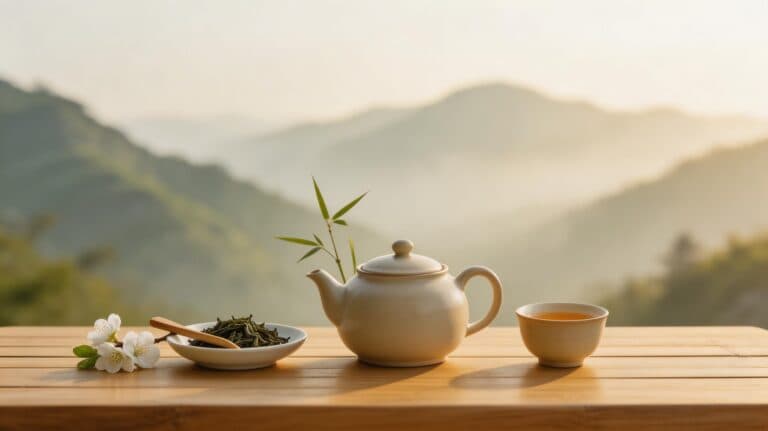
A cup that starts with smoke and plum
I still remember a winter afternoon in Fujian when a pot of charcoal-roasted oolong hit the table and the room went quiet for a second. The tea smelled like warm stone, toasted chestnuts, and a little dried plum. Outside, the wind was sharp. Inside, the cup felt like it had been warmed by a small fire.
That feeling is one reason people connect tea with the five elements. The idea is old, and it is bigger than tea, but tea gives it a nice place to land. You can taste heat, water, earth, metal, and wood in the way tea is grown, roasted, brewed, and shared. I think that is why this topic keeps pulling people back.
What the five elements mean in tea
In Chinese thought, the five elements are wood, fire, earth, metal, and water. They are not the same as physical ingredients. They are more like patterns. Movements. Ways things change and interact.
Tea people often use them as a lens, not as a rigid system. A spring green tea can feel like wood, fresh and upward-moving. A heavily roasted oolong can feel like fire. A thick-aged pu-erh often feels like earth. A sharp white tea bowl can read as metal, crisp and clean. Water is the movement that ties all of it together, the part that carries aroma out of the leaf and into the cup.
That sounds abstract, I know. But once you taste enough teas side by side, the connections start to feel obvious in a very ordinary way.
Wood: growth, sap, and spring tea
Wood is the easiest element to recognize in tea because it feels alive and rising. I taste it in fresh green teas, tender first-flush oolongs, and young leaves with a bright green edge. Think of sweet pea, bamboo, spinach, or the smell of rain on a branch.
Brewing these teas lightly helps. For a good dragon well or sencha, I usually start around 75 to 80°C, then steep for 45 to 75 seconds if I’m brewing gongfu style. Too hot, and the tea turns bitter fast. Too long, and the soft spring notes disappear.
Wood teas are often the ones I drink when I want to feel alert without feeling pushed. They can taste like morning.
Fire: roast, warmth, and movement
Fire is the most obvious element in roasted tea. A rock oolong with a proper bake can smell like toasted grain, cocoa husk, and warm wood smoke. A darker Taiwanese high mountain roast may have floral notes, but they sit under the warmth instead of floating on top of it.
I like fire teas in cooler weather. Not because they are “warming” in some vague sense, but because their flavor seems to keep unfolding after the sip. A roasted Wuyi rock tea brewed at 95 to 100°C, about 10 to 15 seconds for a first gongfu infusion, often gives a dry mineral edge first, then sweet caramel, then a roasted nut finish. That sequence feels like watching a spark travel across dry leaves.
The downside is that bad roasting can be harsh. Burnt sugar is not the same thing as depth. I have had plenty of teas that smelled dramatic and tasted flat. Fire can give structure, but it can also leave a mess.
Earth: depth, age, and the slow brew
Earth is where tea gets weight. This is the element I associate with pu-erh, aged white tea, old-tree black tea, and anything that has spent time settling into itself. The flavors are often darker and rounder, like dried date, forest floor, mushroom broth, wet clay, or sweet tobacco.
Earth teas usually tolerate hotter water and longer steeps. For shou pu-erh, I often rinse once, then brew at 95 to 100°C for 15 to 20 seconds at first. If the tea is good, it will give you a thick cup quickly, almost like soup. Cheap shou can taste muddy or dusty, so price matters here. A decent daily drinker can start around $15 to $30 for 100 grams, while better material climbs fast.
Earth is not flashy. That is part of the charm. It is the element I reach for when I want tea to feel steady instead of bright.
Metal: clarity, edge, and clean finish
Metal is the element people forget, probably because it does not shout. I think of metal in teas with a crisp line: high-grown oolong, a taut white tea, a sharp green tea with a clear finish. The texture can feel polished. The aroma opens in a neat way. The aftertaste lingers cleanly instead of spreading out everywhere.
A lightly oxidized Tie Guan Yin brewed at 85 to 90°C can show this side nicely. The first sip may smell like orchid or lilac, then the finish turns cool and slightly mineral. Some people call this “minerality,” and I get why. It feels like clean air after rain hitting stone.
Metal teas can be the hardest to appreciate if you expect loud flavor. Their gift is precision. They leave less behind, and somehow that makes them easier to remember.
Water: the carrier, the shape-shifter
Water is the quiet one, but it is doing almost everything. It opens the leaf, sets the pace, changes the texture, and decides whether the tea tastes round or thin. Two teas brewed with different water can feel like different teas altogether. Hard water can flatten delicate aromatics. Very soft water can make a tea taste a little too airy.
This is where tea brewing gets personal fast. I like soft-to-medium water for most teas because it lets the leaf speak without too much mineral drag. Around 20 to 80 mg/L hardness is a pleasant range, though local water can surprise you. A tea that tastes dull at home sometimes wakes up in a different kettle.
Water is also the element that reminds me tea is never static. The same leaves change from the first rinse to the fifth steep. That change is the whole point.
How to try the five elements without making it weird
You do not need a philosophy degree to play with this. Put together five teas that show different moods, then taste them side by side. Keep your notes simple. Write down what each cup feels like, not what it “should” mean.
- Wood: a fresh green tea, 75 to 80°C, short steep
- Fire: a roasted oolong, 95 to 100°C, quick gongfu infusions
- Earth: a shou pu-erh, boiling water, rinse plus short steeps
- Metal: a high-grown lightly oxidized oolong, 85 to 90°C
- Water: brew the same tea with different water and compare
If you want help choosing teas for this kind of tasting, you can ask our AI Tea Doctor for a personalized pick. It is useful when you want a starting point and do not want to buy six wrong teas just to experiment.
Why this old idea still feels useful
I do not think the five elements are a test you have to pass. They are a language for noticing what is already in the cup. Some days I taste mostly fire. Other days I only want water and earth, something soft and slow. The same tea can shift depending on your mood, the weather, even the mug you use.
That is the part I trust. Tea changes. You change. The five elements give you a way to pay attention without pretending tea is only one thing.
And if you want a very concrete place to start, brew a roasted oolong on a cold evening, leave it beside a window, and see whether the last sip tastes more like smoke or warm stone.