Spring Equinox Tea Guide for Rising Liver Qi
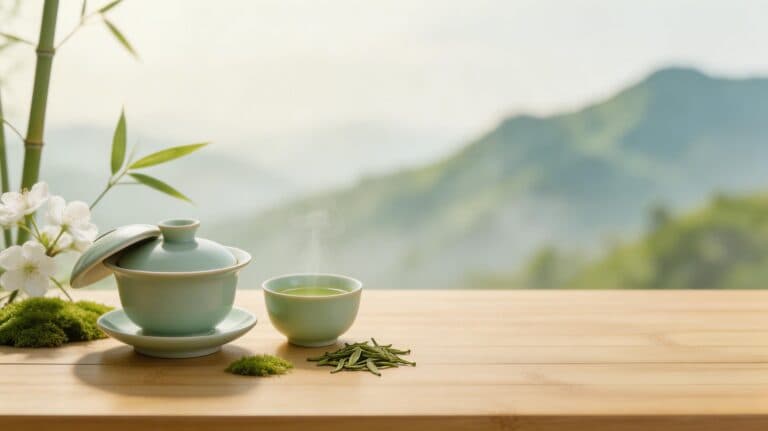
At 6:17 p.m. last March, the light in my kitchen changed
The spring equinox always sneaks up on me. One day I am reaching for roasted yancha and dark shou puerh, then suddenly the air feels looser, the windows stay open longer, and heavy teas start tasting a little like winter coats left on too late.
In Chinese medicine, spring is linked with the Liver system, and this is the season when Liver Qi is said to rise. In plain language, people often describe this time as feeling wired, irritable, restless, headachy, or oddly stuck even while everything outside is growing fast. I think a lot of us know that feeling. You want movement. You want freshness. But you do not want a tea that pokes your nervous system with a stick.
So this is the tea guide I come back to around the equinox: lighter, more fragrant teas, less heavy roasting, less aggressive bitterness, and brewing that keeps things soft.
What “Liver Qi rises” means at the tea table
I am not a doctor, and tea is not medicine. Still, the old seasonal logic makes sense in the cup. Spring has an upward push. Sap rises. Wind picks up. People get snappy. Sleep gets weird. Digestive comfort can get shaky.
Teas that feel too hot in character, very roasted, very smoky, or just plain harsh, can be a bad match for some people during this stretch. Not always. Some bodies still want warmth. But in my experience, the equinox is usually a good time to shift toward teas with lift and ease, teas that smell alive and taste clear instead of dense.
A good spring tea should feel like opening a window, not like turning on a furnace.
The teas I reach for most
Early spring green tea
This is the obvious pick, and for good reason. A fresh green tea can taste like sweet peas, bean sprouts, chestnut, or tender greens, with a little spring water feeling underneath. Good Longjing often gives me toasted seed notes and a soft, almost creamy finish. Bi Luo Chun can be more aromatic, sometimes fruity in a way that surprises people.
Keep the brewing gentle. Try 75 to 80°C water for 1 to 2 minutes in a glass or porcelain cup. Too hot, and the tea gets sharp fast. For decent early spring Chinese green tea, expect about $18 to $35 per 50 grams. Famous origin lots can jump much higher. Honestly, you do not need the top shelf stuff to get the seasonal effect.
The downside is caffeine can hit hard if you brew it strong on an empty stomach. I love spring green tea, but I do not love it first thing in the morning unless breakfast is already on the table.
Lightly oxidized oolong
This is my personal favorite for the equinox because it gives freshness with a little cushion. A good high mountain oolong or a greener Tieguanyin can smell like orchid, sugar snap pea, fresh cream, maybe lilac if you catch it at the right angle. The body is smoother than green tea, which matters on tense days.
I brew these at 90 to 95°C. Gongfu style, I use about 5 grams in a 100 ml gaiwan, then start around 20 seconds for the first steep. Western style, 2.5 grams in 250 ml for 2 minutes works nicely. Price varies a lot. Solid everyday options often sit around $15 to $25 per 50 grams, while high mountain lots can get expensive fast.
And yes, greener oolongs can sometimes smell almost too perfumed. Some people love that. Some people think it tastes like drinking flowers. Fair enough. I usually want one with a buttery base so the floral notes do not float away from the cup.
White tea, especially silver needle or young bai mudan
White tea is quieter. That is exactly why I like it in spring. Silver Needle can taste delicate, sweet, slightly hay-like in a good way, with a cooling finish that lingers in the throat. Young Bai Mudan usually has more shape, more little flashes of melon rind or wildflowers.
Use 85 to 90°C water. Around 2 grams per 250 ml for 3 minutes is a good starting point. Silver Needle is rarely cheap. Expect $25 to $50 per 50 grams for tea worth slowing down for. Bai Mudan is often a better buy.
On a day when I feel wound up, white tea does something roasted tea usually does not. It lowers the volume.
Jasmine tea that actually tastes like tea
Bad jasmine tea tastes like perfume over tired leaves. Good jasmine tea smells deep and natural, like flowers after dark, with a clean green base under it. This matters. The scent should lift the tea, not cover it.
I think spring is the best time for it. The floral aroma fits the season, and the greener base keeps things light. Brew around 80°C for 90 seconds to 2 minutes. Mid-range jasmine pearls often cost $12 to $24 per 50 grams.
There is also a mood piece here. Scent changes how we feel. A small 2020 review in Molecules looked at jasmine aroma and noted calming effects linked to the nervous system. Tea is never just chemistry, but it is not only imagination either.
Teas I usually drink less of around the equinox
Heavily roasted oolong
I love a deep roast in cold weather. Wuyi rock tea with mineral bite and charcoal warmth can be amazing. But during the equinox, especially when I am already feeling tense, it can read as too pushy. The roast sits in the room. So does the caffeine.
Young sheng puerh, brewed hard
This one is tricky because good young sheng can feel very alive in spring. It can also go straight from enlivening to agitating. Strong bitterness, fast energy, empty-stomach regret. I still drink it, just not casually. Short steeps only, and usually after food.
Very smoky black tea
Lapsang Souchong has its place. So do stronger black teas from Yunnan or Assam. But when the season already feels upward and windy, smoke and malt can be a lot. I save them for rainy mornings that still feel cold.
How to brew for the season
The biggest mistake I see in spring is overbrewing. People buy a beautiful fresh tea, then hit it with boiling water for four minutes and decide it is bitter. Most spring-friendly teas want a lighter hand.
- Use cooler water for green and jasmine, usually 75 to 80°C.
- Shorten your steeps before reducing leaf. Time changes the cup fast.
- Try porcelain or glass if you want clearer aroma and less heat retention.
- Drink after food when your body is feeling touchy.
- Keep portions smaller if caffeine has been hitting harder lately.
I also lean toward gongfu brewing in spring, even for teas people often brew western style, because it lets me catch the tea as it changes. First steep bright and green. Next one softer. Then a sweet, lingering finish. That arc is part of the pleasure.
A few pairings that make sense right now
Longjing with plain rice crackers is lovely. So is jasmine with a slice of pear. A greener oolong with lightly salted cashews works better than sugary pastries, at least to my taste. Sweet food can flatten spring teas and make their high notes feel clumsy.
And if you are trying to pick between two styles, ask our AI Tea Doctor for a personalized suggestion. It is actually useful for matching tea to time of day, caffeine tolerance, and the kinds of flavors you already know you like.
My simple rule for equinox drinking
I want teas that move, but do not shove. That usually means green tea with sweetness, floral oolong with some creaminess, white tea with a calm finish, jasmine that still tastes alive underneath the flowers.
Last spring I made a very fine early Anji Baicha at 78°C, forgot about my email for ten whole minutes, and watched steam fog the lower half of the window while the neighborhood plum tree shook in the wind. That felt like the right tea for the season. Fresh, a little restless, still gentle enough to hold in the hand.