Solar Term Tea Guide: What Chinese Tradition Says About Seasonal Tea
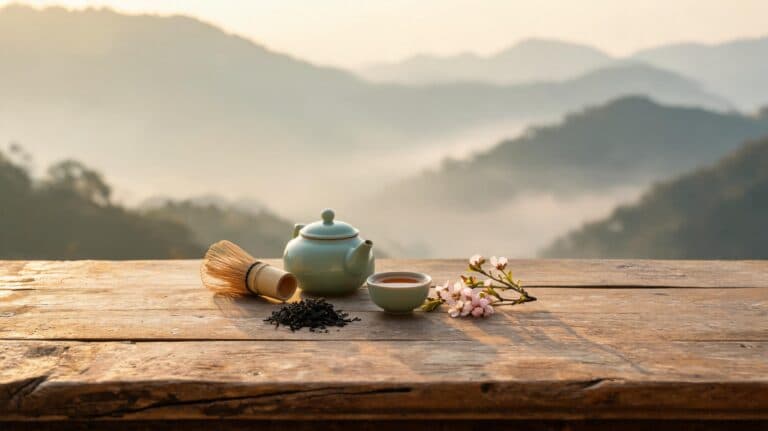
I was half-asleep on a September morning when I found myself reaching for a dark, tippy Yunnan black tea—not my usual green. It wasn’t a decision. The air had changed overnight, crisp and dry, with a chill that settled in my knuckles. Afterwards I checked the calendar: Cold Dew had arrived. My body had already started its own solar term tea guide, no study required.
That’s what I want to share here—not a rigid rulebook, but a lived-in seasonal tea rhythm. The 24 solar terms don’t demand a precise tea for each block. They simply describe the outside world so accurately that drinking with them starts to feel inevitable.
What Are the 24 Solar Terms and Why Do They Matter for Tea?
These 15-day increments, each corresponding to a 15° change in the sun’s celestial longitude, offered a rhythm that predates any centralized calendar. The system breaks the year into 24 phases, each roughly 15 days long, tracking shifts in temperature, humidity, and daylight. Farmers used it to decide when to plant and harvest. Tea drinkers eventually noticed that the same shift that ripens rice also changes what the body craves in a cup.
In practice, the solar terms tell you when tea leaves are at their best—and when your digestion needs something different. Pre-Qingming green tea, for instance, is only possible because the weather preceding Clear and Bright (around April 5th) is cool and damp, keeping the buds tender. A few weeks later, the leaves stiffen. The tea and the term move together.
Is There Really a Right Tea for Each Solar Term?
Yes, but the “right” tea is what your body asks for when the season shifts—and the solar term tea guide helps you name that call. Tradition gives us a starting point: light, cooling teas in summer, warmer, deeper ones in winter, fresh greens in spring, and toasty oolongs when the autumn dryness hits. I don’t follow it like a schedule. But by Grain Rain (late April), I’m reaching for freshly processed green tea before I even think about it.
Pre-Qingming green tea, picked before April 5th, carries a fleeting freshness that’s impossible to replicate later in the year. A good Longjing from that narrow window—maybe 10 days—can cost $60–$100 per 100g because the leaves are so brief. The body knows it too: after a winter of roasted oolongs and aged pu-erhs, that bright, almost vegetal snap feels exactly right. This is where a solar term tea guide stops being folklore and becomes something you taste.
What Tea Should You Drink During the Hottest Solar Terms?
Lightly oxidized oolongs, white teas, and cold-brewed greens work best—they cool without overheating you. Major Heat (late July) and Minor Heat (early July) ask for something that doesn’t fight the weather. I used to force hot tea through the peak of summer and wonder why I felt sluggish. Now I cold-brew a Taiwanese Jin Xuan at 5°C for 6 hours (5g per 500ml), and the result is a honey-sweet, smooth cup that I crave when it’s 34°C outside.
Cold-brewing a Taiwanese oolong at 5°C for 6 hours extracts a honeyed, smooth character that no hot brew can replicate—and it’s the only thing I want when the temperature hits 34°C. Traditional Chinese medicine says summer depletes qi, so you don’t want teas that are too hot or too astringent. White tea, like a Bai Mudan from 2022, works beautifully brewed at room temperature for an hour. It’s soft, with a faint melon sweetness, and it never turns bitter if you forget about it. Herbal tisanes like chrysanthemum or mint also appear in many seasonal tea guides for this stretch.
What About the Coldest Solar Terms? What Tea Warms You Best?
Shou pu-erh, aged white tea, and high-fired oolongs deliver a warmth that feels like a blanket for your insides. I keep a 2015 Fuding shou mei cake that cost $45 for 350g, and in Major Snow (early December) I snap off a chunk and brew it at 90°C. The liquid comes out like date syrup—thick, slightly medicinal, completely grounding. A 2015 Shou Mei white tea cake, bought for $45, turns into liquid dates during Major Snow—nothing else warms the same way.
For Winter Solstice, I switch to a ripe pu-erh from Menghai, flash-rinsed twice at 95°C, then steeped 20–30 seconds per infusion. The microbial fermentation creates this earthy, molasses character that cuts straight through the heaviness of winter meals. You won’t get that from a green tea in December—the body would just tense up.
How Can You Build Your Own Solar Term Tea Guide?
Start by noticing what you actually reach for when the weather changes. Jot down the solar term and the tea that felt perfect. After a year, you’ll have a map. The traditional pairings give you a rough direction: green teas around Spring Equinox, white teas approaching Summer Solstice, oolongs near Autumn Equinox, and pu-erh or black teas by Winter Solstice. But your version might tilt differently. Some winters I drink more aged sheng pu-erh than shou, just because my stomach asks for it. That’s still the guide working.
Your personal solar term tea guide doesn’t need to be complicated—simply pay attention, and by next year you’ll have a map of what your body wants at every 15-day interval. If you want a shortcut, keep an eye on the teas Hou Tea highlights each season; they often shift with the solar terms. Use 85°C water for your spring greens, 90°C for autumn oolongs, and let the calendar do the rest.
Still figuring out what tea fits this solar term? Take our Five Elements quiz or ask our AI Tea Doctor—in 30 seconds it’ll give you a personalized recommendation based on how you feel right now.