Seasonal Tea: What to Brew in Every Weather
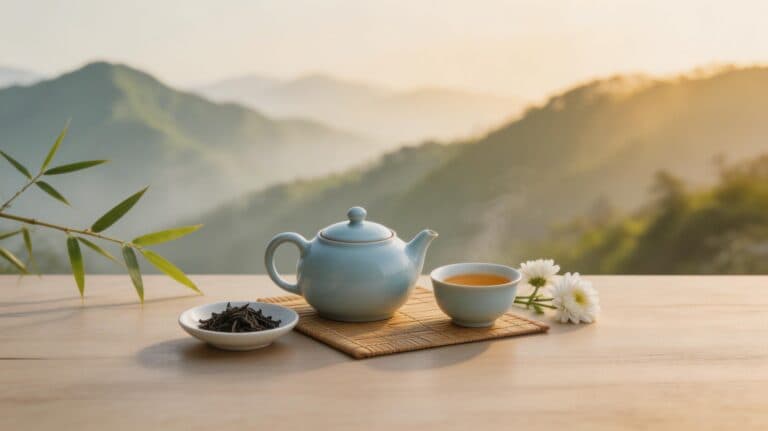
The first cold morning always changes my kettle
On the first proper cold morning of the year, I reach for tea before I even think about breakfast. The kitchen is dim, the windows are fogged, and a black tea starts to smell different the moment the water hits it, warmer somehow, almost bread-like. In summer I would have wanted jasmine green tea. That same tea can feel too sharp and too quick when your hands are cold.
I think a lot of tea advice ignores the simple fact that our bodies change with the weather. What tastes right in July can feel thin in January. What feels soothing in February can seem heavy in August. The season you are in really should change the tea you are drinking.
Spring wants something fresh, not loud
Spring is the season I reach for green tea most often. Not the grassy, bitter kind brewed carelessly, but a tea with a clean snap and a little sweetness. A good Longjing, for example, can taste like toasted pea shoot, chestnut skin, and a soft finish that hangs around quietly.
For green tea, I usually use 75 to 80°C water and steep for 1 to 2 minutes. Go hotter or longer and you start pulling out the rough edges. Spring tea should feel like the first open window after a long winter, not a shout.
Sheng pu-erh also makes sense here, especially if it is young and lively. It has a springy kind of bitterness, the sort that wakes the tongue. I know some people find that harsh. Fair enough. I like it with a little food, maybe a plain rice cake or a buttered slice of toast.
Summer calls for cold and clear
Hot weather changes everything. I want tea I can drink fast, or tea I can chill in a pitcher and keep in the fridge. Cold-brewed green tea is one of my summer staples, and it is much gentler than hot-brewed tea poured over ice. Try 5 grams of tea in 1 liter of cold water, then leave it in the fridge for 6 to 8 hours. It comes out soft, sweet, and a little melon-like if the leaf is good.
Hojicha is another summer friend. Roasted Japanese tea has that easygoing toasty smell, almost like cracked wheat and campfire smoke, but without the heaviness of a strong black tea. I drink it hot even in July sometimes, because the roast flavor feels cooling in a strange way. Maybe that sounds contradictory. It is still true.
And then there is chilled oolong. Lightly oxidized oolong, especially something floral and not too aggressive, can taste like orchid, fresh apricot, and wet stone after a few hours in the fridge. I prefer it unsweetened. Sugar flattens it too much.
Autumn is for tea with edges
Once the air turns dry and the light goes amber, I want teas that have depth. This is when oolong really starts to shine for me. A roasted Tieguanyin can taste like toasted hazelnut, honeyed flowers, and a little charcoal at the finish. A charcoal-roasted Wuyi oolong gives more smoke and baked fruit. Both feel made for sweaters and open books.
I brew most oolongs around 95°C, using 5 to 7 grams in a small pot or gaiwan. First steep, 20 to 30 seconds. Then a little longer each time. The leaves open up in stages, and that is part of the pleasure.
Black tea fits autumn too, especially malty Assam or a honey-sweet Keemun. I think people underestimate how good black tea is when the weather starts to cool but is not yet truly cold. It has enough body to feel satisfying, but not so much weight that it presses on you.
Winter wants warmth, structure, and a little patience
In winter I want tea that feels like it can stand up to a heavy meal, a long conversation, or a quiet afternoon with nowhere to be. Aged pu-erh does this beautifully. Good ripe pu-erh can smell like damp wood, dates, cocoa powder, and old books in the best possible way. It is soft, grounding, and kind to the stomach.
Winter is also the season for strong black tea, especially if you drink it with milk or a bit of honey. A breakfast-style blend at 95 to 100°C for 3 to 4 minutes can be exactly right on a freezing morning. Not fancy. Just effective. Sometimes that is what I want most.
There is a small trade-off here. Heavy teas can become exhausting if you drink them all day, and I do not think everyone needs a dense, dark brew just because the weather is cold. A lighter tea can be a relief when the house is overheated. I keep both around.
Think about how your body feels, not just the calendar
Seasonal tea drinking is not a rulebook. It is more like paying attention. Dry spring allergies might make you want something soft and clean. A humid summer afternoon may call for something cold and unsweetened. When your skin feels tight in winter, a rounder, more comforting tea makes sense. I change my tea based on weather, yes, but also on mood, meals, and how much sleep I got.
That is where a little self-knowledge matters. Some people feel better with green tea year-round. Others always prefer roasted teas. There is no prize for forcing yourself into a seasonal pattern that does not fit. If you want help narrowing it down, you can ask our Tea Doctor for a pick based on your weather, your taste, and how you actually drink tea.
I keep one spring tea, one summer tea, one autumn tea, and one winter tea on the shelf at all times. Right now the winter slot is an aged ripe pu-erh from Yunnan, about $18 for a 100 gram cake sample, and it smells like wet bark after rain. That scent alone can make a cold evening feel more human.