Pu-erh Tea Guide: Raw vs Ripe, Aging, and First Cakes
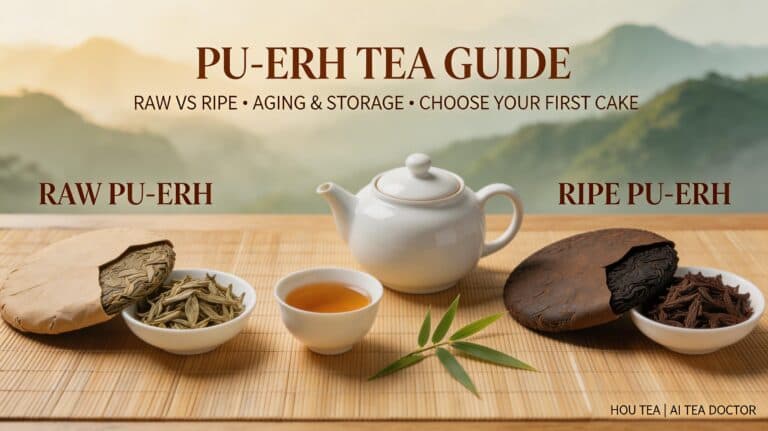
Raw and ripe pu-erh look similar on the shelf, then taste completely different
I remember the first time I cracked open a young raw pu-erh cake. The dry leaf smelled sharp and a little green, like damp cedar, hay, and the skin of an unripe plum. The brewed tea was brighter than I expected, with a bite that lingered. Then I tried ripe pu-erh the same afternoon and got something darker, softer, and much rounder. Earth, cocoa, old wood, a little sweet bean paste. Same family, very different moods.
This is why a pu-erh tea guide matters. People buy one cake, brew it badly, and think pu-erh is one thing. It isn’t.
Raw pu-erh and ripe pu-erh, in plain language
Raw pu-erh, often called sheng, starts with green tea material that is pressed and then allowed to age slowly. Young sheng can taste brisk, floral, smoky, or even a bit aggressive if the tea was made rough. With age, the sharp edges soften. Good raw pu-erh can develop notes of dried fruit, honey, herbs, and old paper. I like it most when it has some structure left, because fully mellow sheng can lose the spark that made it interesting.
Ripe pu-erh, or shou, is a different story. It goes through a controlled piling process that speeds up oxidation and aging-like character. The result is a tea that usually tastes earthy, sweet, and smooth right away. Think damp forest floor, walnut skin, caramel, maybe a little mushroom broth if the tea is clean and well made. A bad ripe pu-erh can smell muddy or fishy. A good one feels calm and deep.
If you want a short version of this pu-erh tea guide, here it is: raw pu-erh changes more over time, ripe pu-erh is usually ready now.
How aging changes the cup
Aging is the part that pulls a lot of people in. With raw pu-erh, time can turn a rough, leafy tea into something layered and gentle. I’ve tasted 10-year-old cakes that smelled like dried apricot and camphor, with a clean sweetness that stayed in the mouth for minutes. I’ve also tasted old tea that had just gone flat. Age alone does not save a mediocre cake.
Ripe pu-erh ages too, but in a different way. The fermentation character settles down, the earthy notes get cleaner, and the texture can become silkier. A fresh ripe cake might taste a little heavy, while an older one can feel almost velvety. Still, I would not buy ripe pu-erh only for aging unless you already know the producer and the storage is sound.
Storage matters more than people think. Dry storage keeps tea cleaner and brighter. Humid storage pushes faster aging, but it can also blur the tea and invite off smells if things go wrong. I prefer moderate humidity, stable temperature, no strong odors, and patience. No incense. No spice rack. No basement that smells like cardboard and laundry soap.
How to store pu-erh without messing it up
This is the part beginners worry about, and honestly, they should. Pu-erh absorbs odors easily. If it sits next to coffee, perfume, or a closet full of detergent, it can pick that up. Keep cakes in a breathable container, away from sunlight, and out of hot kitchen cabinets that swing wildly in temperature.
A few simple rules help a lot:
- Store cakes in the original paper wrap if possible.
- Keep them in a cool, dry place with steady air.
- Avoid sealed plastic bags for long-term storage unless you know exactly why you are using them.
- Do not store pu-erh near spices, tea candles, or anything scented.
I usually tell friends to buy tea they can drink now, plus one cake they can forget about for a while. That way storage becomes part of the fun, not a homework assignment.
How to choose your first cake
For a first purchase, I think you should ignore the hype and buy for taste, price, and trust. A decent beginner cake can cost around $20 to $60. Once you move into better single-origin material or older stock, prices climb fast. A lot fast. Some famous tea mountains charge like they know your weakness.
If you want a first raw cake, look for something from a reputable vendor with tasting notes that mention sweetness, clean bitterness, or floral top notes. Avoid teas described only as “powerful” or “strong.” That usually means nothing useful. If you want a first ripe cake, look for notes like dried date, cocoa, clean earth, or red bean. Those are friendly markers.
I’d also suggest buying smaller samples before a full cake. A 25 to 50 gram sample tells you a lot. You will learn whether you like the tea’s texture, not just the aroma. And texture matters in pu-erh. A tea can smell wonderful and still feel thin or rough on the tongue.
There’s a good pu-erh tea guide trick here: ask yourself whether you want energy, comfort, or aging potential. Raw often leans toward energy. Ripe leans toward comfort. One is not better. They just scratch different itches.
Brewing basics that make pu-erh taste better
Use boiling water for most pu-erh, around 95 to 100°C. If the tea is very young raw and a little aggressive, you can ease down a touch to 90 to 95°C. Rinse the leaves once for 5 to 10 seconds, then start with a short steep, maybe 10 to 15 seconds in a small gaiwan or a tiny teapot.
For a western mug-style brew, use about 4 to 5 grams per 250 ml water and steep 2 to 3 minutes, then adjust. I prefer gongfu brewing because it shows the tea’s changing sides. The first infusion might be all sharp leaf and smoke, then the third gets sweeter, and later rounds can feel thicker and calmer.
Do not expect pu-erh to taste perfect on the first pour. It often needs a few steeps to wake up. That is part of the charm.
My honest take on raw versus ripe
If I had to choose only one for daily drinking, I would probably pick ripe pu-erh in cooler weather. It is easier, softer, and less temperamental. But raw pu-erh gives me more surprises, and I like that. On a good day, a young raw cake can taste like green mango, pine resin, and sweet herbs all at once. On a bad day, it can feel too bitter and a little rude. That trade-off is real.
So this pu-erh tea guide comes down to a simple idea. Start with one ripe cake if you want comfort, or one younger raw cake if you want to watch tea evolve over time. Buy from someone who can tell you where it came from, how it was stored, and what it should taste like now. If you want help narrowing it down, our AI Tea Doctor can point you toward a style that fits your palate, and Hou Tea has a few good starter options that are easy to compare side by side.
And if you ever open a cake and catch that mix of cedar, dried plum, and old books, you’ll know you found the right kind of rabbit hole.