Loose Leaf Tea vs Tea Bags: Is the Extra Effort Worth It?
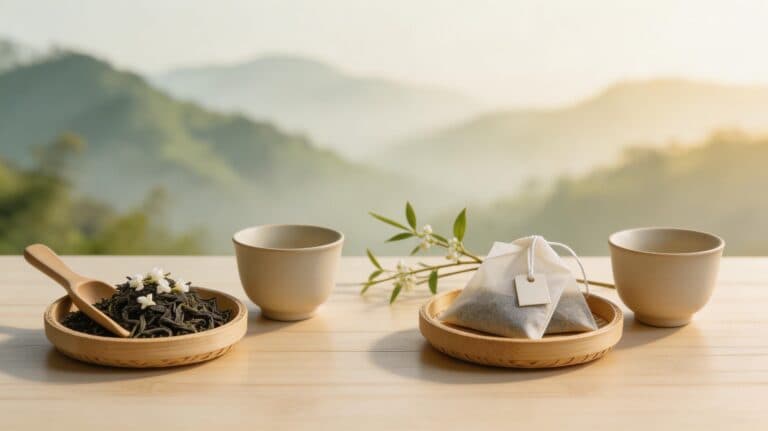
The first thing I notice is the smell
A handful of loose leaf black tea in a warmed pot smells like malt, dried fruit, and a little bit of wood smoke. A standard tea bag usually gives me something flatter, even when the tea inside is decent. That gap is not magic. It comes down to space, leaf size, and how much room the water has to move around the tea.
I’ve brewed both side by side many times. In a mug, using water around 95°C for 3 to 4 minutes, a loose leaf Assam usually tastes fuller and more layered than the same style in a paper bag. The bag version can still be pleasant, but it often feels clipped at the edges, like someone turned the color down a little.
What loose leaf actually gives you
Loose leaf tea usually means larger whole leaves or bigger pieces. That matters because whole leaves keep more of their oils and character intact. Once they open in hot water, you get more depth from the same tea. A first steep of a good oolong can taste like toasted chestnuts and orchids. The second steep might lean sweeter, with a creamy finish. That kind of shift is much harder to get from tiny bagged particles.
It also gives you control. You can measure 2 grams for a small cup, 5 grams for a mug, or more if you want a stronger brew. You can rinse a pu-erh, shorten the steep if it gets bitter, or push a green tea at 75°C for 60 to 90 seconds so it stays fresh instead of harsh. I like that freedom. It makes tea feel alive.
The downside is real, though
Loose leaf asks more of you. You need a strainer, an infuser, or a teapot with a built-in basket. You have to clean it. You have to store the tea in a way that keeps it away from light, heat, and weird kitchen smells. And if you are rushing out the door, this can feel like one more small task you did not ask for.
Price can go either way. A grocery-store tea bag box might cost $4 to $7 and make 20 to 40 cups. Loose leaf can be cheaper per cup than people expect, especially for everyday teas bought in 100g packs. But a nicer loose leaf tea can easily run $12 to $25 for 100g, and premium lots go higher. Tea bags are easier on the wallet at the shelf. Loose leaf often wins once you look at quality per cup.
Tea bags are not all bad
Some tea bags are genuinely good. Pyramid bags with bigger leaf pieces can brew a respectable cup, especially for flavored black tea, chamomile, or mint. I’ve had bagged English breakfast teas that were reliable, brisk, and exactly what I wanted at 7 a.m. No fuss. No tools. Just hot water and five calm minutes.
And there is a reason tea bags became so common. They are fast, cheap, and consistent. If you want tea at work, in a hotel room, or on a train, a bag is easier. I would never pretend that convenience does not matter. Sometimes you want a cup, not a project.
Where tea bags usually fall short
The problem is not the bag itself. It is what usually gets packed into it. Tiny fannings and dust brew fast, which sounds efficient, but fast extraction can turn bitter quickly and leave you with less aroma. That is why many bagged green teas taste sharp, and why a lot of bagged oolongs feel one-note. The tea inside may be fine raw material, yet the format works against it.
Paper bags can also mute the aroma a bit. You notice it when you open the wrapper. Loose leaf in a tin or pouch often gives you a clear scent before it ever touches water. A tea bag usually smells like cardboard and a hint of tea. That is not always a dealbreaker, but it tells you something.
So is the extra effort worth it?
For me, yes, most of the time. If I am drinking tea to wake up, slow down, or actually taste the tea itself, loose leaf is worth the extra minute. The flavor is usually better. The smell is better. The steeping control is better. You also waste less if you rinse and re-steep good leaves two or three times.
But I do not think tea bags are a compromise you should feel embarrassed about. If you drink tea casually, or you only want one cup before work, tea bags make a lot of sense. I keep them around. Not because I think they beat good loose leaf, but because a tired Tuesday is not always the right moment for a little brewing ritual.
If you are unsure where to start, pick one tea you already like and buy it in both forms. Brew them the same way. Use 95°C water for black tea, 80°C for many oolongs, and about 75°C for green tea. Try 3 minutes in a bag and 3 minutes with loose leaf, then taste them side by side. That comparison tells you more than any opinion I can hand you.
And if you want a pick matched to your taste, our AI Tea Doctor can help narrow it down without making you sort through fifty labels on your own. I use that kind of tool the same way I use a good shopkeeper’s advice, as a shortcut to the cups worth trying next.
My honest take: tea bags are fine for convenience, loose leaf is better for pleasure. The gap is widest with green tea, oolong, and pu-erh. It is smaller with sturdy black teas and herbal blends. On a rainy evening, I still reach for loose leaf and a small gaiwan, because the second steep usually tastes like warm toast and dried apricot, and that is hard to beat.