Loose Leaf Tea vs Tea Bags: Is It Worth the Extra Work?
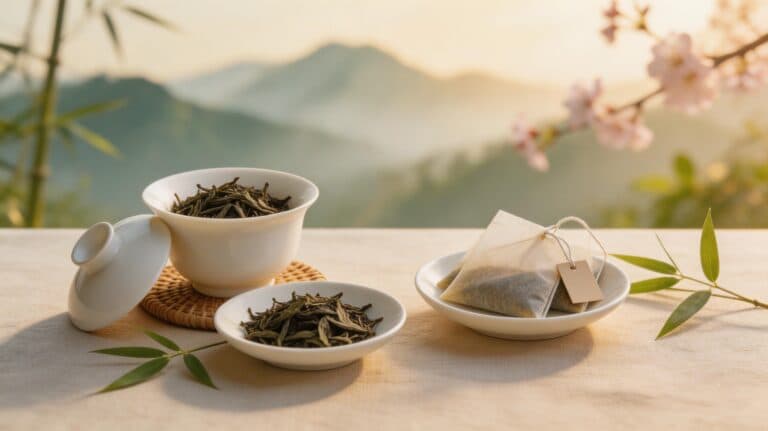
Loose leaf tea vs tea bags: what changes in the cup?
The first time I brewed the same tea two ways, I noticed it before I even tasted it. The loose leaf version unfurled into long jade needles in the pot, while the bag held a cloudy little pile of dust and broken pieces. Same tea, very different mood.
That matters more than people think. Tea bags usually contain smaller leaf grades, which brew fast and strong. Loose leaf keeps more of the leaf intact, so the flavor tends to open up in layers instead of hitting all at once.
I’ve had bagged teas that were perfectly fine. I’ve also had loose leaf teas that were overpriced and dull. So I’m not here to pretend one is always better. But if you care about taste, the difference is real.
Taste: where loose leaf usually wins
Loose leaf tea usually gives you more space to taste the actual plant. A good green tea can taste like steamed spinach, sweet peas, and a little chestnut. A decent black tea can move from malt to cocoa to dried fruit as it cools.
Tea bags often taste flatter because the leaves are broken up. That extra surface area helps the tea brew quickly, but it can also pull out more bitterness and less sweetness. With fine tea dust, the first sip can be all edge and no middle.
I think this is especially obvious with oolong and white tea. A tied-in bag will never let a rolled oolong fully open. You get a short, dark, rushed cup instead of the floral finish and buttery texture that make the tea worth buying in the first place.
Convenience: tea bags still have a real job
Tea bags are easy. Too easy to dismiss, honestly. You drop one in a mug, add water, and move on with your life.
That convenience is the point. For office desks, hotel rooms, early mornings, and very tired people, tea bags make sense. I keep a box around for exactly that reason. Some days I want decent tea in 90 seconds, not a small ceremony with a kettle, timer, and strainer.
And there are actually better tea bags now than there used to be. I’ve tried pyramid bags with whole leaf inside, and some are genuinely good. Still not quite as open and expressive as loose leaf, but closer than the dusty paper bags many of us grew up with.
Price: the real trade-off
Loose leaf often looks expensive at first. A decent everyday tea can run about $8 to $20 for 50 to 100 grams, and a specialty tea can go much higher. A box of tea bags may look cheaper on the shelf.
But price per cup can be less dramatic than it seems. One teaspoon of loose leaf usually makes two or three steepings, especially with oolong or pu-erh. A single tea bag is usually one and done. So the math depends on how you brew.
If you drink tea daily and buy in bulk, loose leaf often gives better value over time. If you drink tea once in a while, or you like variety more than depth, bags may make more sense. I’ve seen people spend a lot on loose leaf and still make a weak cup because they used too little leaf. That’s a waste too.
Brewing: loose leaf asks more from you
This is the part that keeps some people away. Loose leaf usually needs a strainer, basket, gaiwan, or teapot. You also have to pay attention to water temperature and time.
For green tea, I usually use 75 to 80°C water and steep for 1 to 2 minutes. For black tea, 95 to 100°C for 3 to 4 minutes works well. Oolong depends on the style, but many do nicely around 90 to 95°C with short steeps, especially if you want to taste them change over several infusions.
Tea bags are simpler because they’re built for one standard mug and one standard result. That’s not a flaw. It’s a design choice.
So is the extra effort worth it?
For me, yes, most of the time. Loose leaf is worth it when I want to actually pay attention to the tea, or when the tea itself has enough character to reward a little care. A rolled oolong, a good sencha, a fresh jasmine pearl, these teas can feel dull in a bag and alive in a pot.
But I don’t think loose leaf is a moral upgrade. Tea bags are useful, dependable, and often the best choice for travel or busy mornings. If the bag gets you to drink tea instead of skipping it, that counts.
The real question is what you want from the cup. If you want ease, tea bags are fine. If you want more aroma, more texture, and more room for the leaves to do their thing, loose leaf usually gives you that. Ask our AI Tea Doctor if you want help picking a loose leaf tea that fits the way you actually drink, because the right tea makes the extra minute feel short.
I still keep both in my kitchen. The loose leaf tins live on the shelf. The tea bags stay in a drawer for rushed mornings and rainy evenings when I want tea now, not later.