Lapsang Souchong: The Smoky Black Tea Story
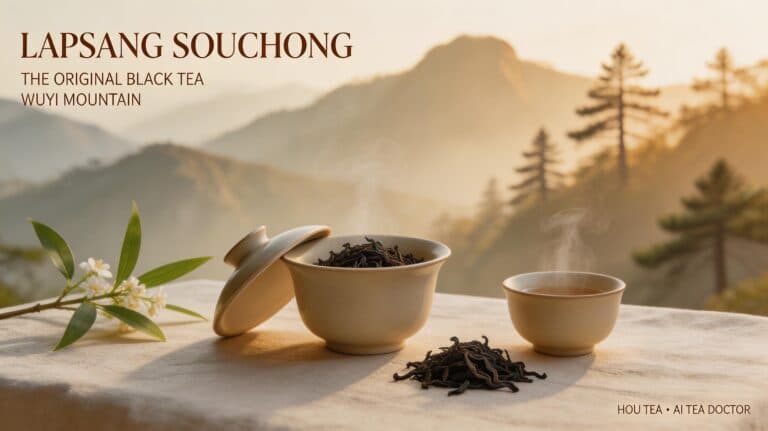
A tea that smells like a campfire, but tastes like tea
The first time I opened a bag of lapsang souchong, the aroma hit me before I even poured water. Pine smoke. Dry wood. A little sweet, like the inside of an old cedar box. I remember pausing for a second, because it smells so strong that people often assume the taste will be harsh. It usually isn’t.
Good lapsang souchong has a smoky top note, then a dark, malty body underneath. If the tea was made well, the smoke feels woven into the leaf rather than dumped on top. That difference matters a lot. Cheap versions can taste like ash and barbecue sauce. The better ones feel more like roasted chestnuts with a bonfire drifting past in the background.
Where it comes from
Lapsang souchong comes from the Wuyi Mountains in Fujian, China, one of the most famous tea regions in the country. The story I’ve heard most often says the tea was born from necessity. During times of disruption, tea makers rushed their leaf through processing and used pine wood to speed up drying. The result was smoky tea, and people eventually learned to like it enough that it stuck around.
That origin story may not be perfectly tidy, but it sounds believable to me. Mountain tea makers have always been practical. If pine wood was what they had, they used pine wood. And the style kept evolving until it became its own thing, a tea with a strong personality and a very clear sense of place.
Why this tea tastes so different
The smoking happens during drying. The leaves are withered, rolled, oxidized, then dried over pine fires. That last step is where the character comes from. In a well-made lapsang souchong, the smoke is there, but it doesn’t erase the leaf. You still get notes of cocoa, dried date, leather, and sometimes a little stone fruit underneath.
I think the best way to describe it is this: imagine black tea, then add a memory of a wood stove. Not enough to cover the tea. Just enough to change the mood.
The word “souchong” refers to a leaf grade from smaller, lower tea leaves. People sometimes think it means the tea is a certain species, but it’s really about processing and classification. The famous pine-smoked black tea from Wuyi Mountain became known in the West as lapsang souchong, and that name has stuck for centuries.
What to expect in the cup
Brewing makes a big difference here. For a classic version, I use water around 95°C and steep 3 to 4 grams in 150 ml for 30 to 45 seconds if I’m going gongfu style. For a western mug, try 2 to 3 grams in 250 ml for 2 to 3 minutes. Go too long and the smoke can get a little aggressive. Shorter infusions usually show more sweetness.
The liquor is often deep amber to reddish brown. The first sip can be intense, then it settles. I get dark toast, molasses, cedar, sometimes a savory edge that reminds me of mushroom broth. That last note is one reason people either fall in love fast or back away slowly.
And yes, lapsang souchong can be an acquired taste. I wouldn’t hand it to everyone as their first black tea. But if you already enjoy peated whisky, smoked salt, grilled foods, or lapsang souchong in a tea cocktail, there’s a decent chance this one will click.
How to buy a decent one
Price tells you something, though not everything. A drinkable everyday tea may run around $8 to $15 for 100 grams. Better Wuyi-made versions often sit closer to $18 to $35. The really elegant, small-lot teas can go higher. The downside is obvious, good smoky black tea is not usually cheap.
Look for a vendor who tells you more than “smoky flavor.” You want origin, leaf appearance, and some idea of how the smoke was made. Pine-smoked black tea can vary a lot. Some teas are gently smoked. Others are heavily smoked and better suited to blending or cooking. If you want the classic version, I’d ask for a tea that still has sweetness and a clean finish.
If you’re stuck, our AI Tea Doctor can help narrow it down based on how smoky you like your cup. I’d use that if I wanted something more specific than a random search result.
How I like to drink it
I usually drink lapsang souchong plain in the morning or with something savory. It’s excellent with eggs, smoked cheese, or toast with butter. Sometimes I add a splash of milk, but only when the tea is very smoky. Milk softens the edges and can make the sweetness show up more clearly.
On a cold day, I’ll brew it a little lighter and let it cool for a minute before drinking. That seems to bring out more cedar and less fire. On warmer days, I prefer it iced, brewed strong and poured over a few cubes. It turns more brisk, almost like a campfire version of cold brew coffee, though lighter and cleaner.
Why people keep coming back to it
Some teas are easy to like. This one is memorable. That’s part of the appeal. A lot of tea disappears into the background of your day. Lapsang souchong announces itself and stays in the room for a while.
For me, that’s the charm. It tastes like tradition, smoke, and mountain air all at once, even if that sounds a little dramatic. Maybe that’s why people still talk about it centuries later. Or maybe they just really like tea that smells like a pine forest after rain.
Either way, the next time you see lapsang souchong, think less about novelty and more about craft. It is one of the oldest black tea styles still widely recognized, and when the leaf is good, the smoke feels almost like a signature written in the air. If you want help finding a style that fits your taste, Hou Tea and the AI Tea Doctor can point you toward a softer smoked cup or one with a stronger pine-fire edge.