How to Store Tea Properly by Type: Green, Oolong, Pu-erh
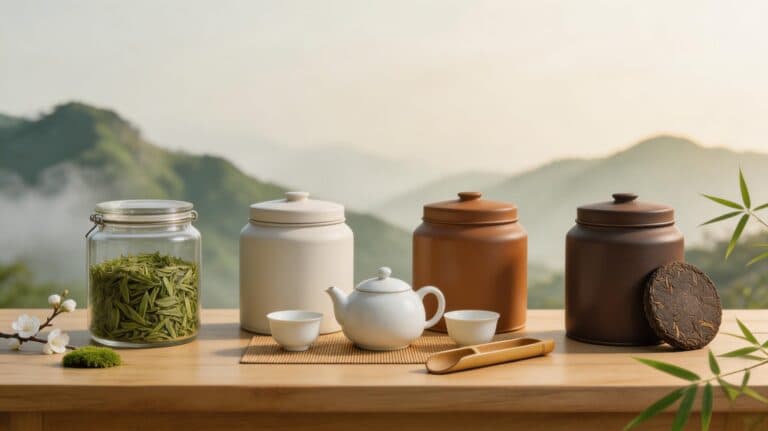
How to store tea without ruining it
Last summer I opened a forgotten pouch of green tea that had spent 4 months above my stove, and the smell told the whole story before I even brewed it: flat, a little oily, almost like stale nuts instead of fresh leaves.
How to store tea is simple in principle: keep it away from air, light, heat, and moisture, then make one exception for pu-erh, which needs some airflow to age well.
That one sentence covers most of it. But Chinese tea is not one thing. A fresh Dragon Well and a 2018 shou pu-erh do not want the same home.
For most teas, I think the best setup is an opaque, odor-free tin kept in a cool cupboard around 15-25°C. Not the fridge door. Not a glass jar on a sunny shelf. And definitely not next to coffee, spices, or that half-open box of cinnamon cereal. Tea absorbs smell fast. Faster than many people expect.
A good rule for how to store loose leaf tea: buy amounts you can finish in 2-6 months for green tea, 6-12 months for many oolongs, and longer for white tea if it is stored well. The downside of buying 500g to save $8 is that tired tea tastes expensive and sad.
How should you store green tea?
Green tea should be stored as cold, dark, dry, and airtight as you can manage because it loses freshness faster than the other major Chinese tea types.
Green tea is the one I baby the most. Those sweet, chestnut-like notes in Longjing or the fresh pea aroma in Bi Luo Chun fade quickly once oxygen gets in. In my experience, green tea shows storage mistakes within weeks, not months.
For daily use, an airtight tin in a cool cupboard works well if you will finish it within 4-8 weeks. For longer storage, the refrigerator can help, but only if the tea is sealed extremely well. I mean double-sealed, with as little trapped air as possible. Otherwise it picks up fridge smells, and that is hard to forgive in the cup.
Brewed at 80°C for about 20-30 seconds, well-stored green tea tastes alive. Poorly stored green tea tastes dull and woody.
Green tea is the least forgiving Chinese tea when storage is sloppy.
One more thing. Let refrigerated tea come back to room temperature before opening the bag. Give it 1-2 hours. That avoids condensation on the leaves, which is exactly the moisture you do not want.
How to store oolong tea properly
Oolong tea should be stored airtight and away from light, but how strict you need to be depends on whether the tea is fresh and floral or roasted and darker.
This is where people get confused, fairly. Oolong is a huge category. A high-mountain Taiwanese oolong with a creamy floral lift is much more fragile than a charcoal-roasted Wuyi yancha. They are both oolong. They do not age at the same speed.
For greener oolongs, I use the same mindset as green tea, just slightly less anxious. Airtight tin. Cool cupboard. Drink within 3-6 months for the best aroma. For roasted oolongs, you have more room. They often hold nicely for 6-12 months, sometimes longer, and a little rest can even calm the roast.
I have had roasted Tieguanyin that tasted sharp when first opened, then softer after 3 weeks in a well-sealed tin. The roast settled down. The fruit came out more.
This matters if you are searching best way to store Chinese tea at home. A floral oolong wants protection. A roasted oolong wants protection too, but it is less likely to fall apart just because you forgot the tin open for 10 minutes.
Try to keep storage under 25°C. Above that, aroma loss speeds up. And avoid clear containers unless they live inside a dark cabinet.
Can pu-erh tea be stored in airtight containers?
Pu-erh tea should not be sealed completely airtight for long-term aging because it needs gentle airflow and stable humidity to develop well.
This is the big exception in how to store tea. Raw pu-erh and ripe pu-erh are living in a different lane. You are not trying to freeze them in place. You are letting them change slowly.
For long-term storage, I like a clean paper wrapper, then a cardboard box or unglazed clay container, kept somewhere with light airflow at roughly 55-70% relative humidity. Temperature around 20-30°C is common for aging. Too dry, and the tea stalls. Too damp, and you risk musty notes or mold.
Pu-erh ages best in a stable space with moderate humidity, mild airflow, and no strong odors.
Airtight plastic tubs are fine for short moves or protection during shipping, but I would not use them for years of storage. And kitchen storage is a bad idea. Steam, grease, random smells, all of it gets into the leaf.
If you just want your pu-erh to stay drinkable rather than age beautifully, the rules are looser. Keep it clean. Keep it dry enough to avoid mold. Keep it away from perfume, incense, and direct sun. That already gets you far.
How to store white tea for drinking now or aging later
White tea should be stored airtight for short-term freshness, or in a clean, dry, low-odor space for slow aging over years.
White tea sits between the other categories. A fresh silver needle can lose its delicate melon and hay notes if you treat it carelessly, but compressed white tea can also age in a lovely way. I have opened a 5-year-old white tea cake that smelled like dried dates and warm grain, which is very different from the fresh version.
For teas you plan to drink within 6-12 months, use an airtight tin and keep humidity low. For aging, especially with cakes, use breathable wrapping and a stable cupboard or shelf, ideally around 50-65% humidity. Less airflow than pu-erh is fine. White tea does not need much fuss.
A common mistake in how to store tea long term is mixing aged white tea and pu-erh in the same box. I would not. Their aromas can drift into each other over time.
What storage mistakes ruin tea fastest?
Heat, sunlight, moisture, and kitchen smells ruin tea faster than fancy container choices ever fix.
I think people overfocus on the jar and underfocus on the room. A beautiful tin sitting on a warm windowsill is still bad storage. So is a premium tea kept above an oven that hits 35°C every night.
- Do use opaque tins, sealed pouches, paper wrap for aging pu-erh, and cool cupboards.
- Do not use clear jars in sun, fridge storage without tight sealing, damp basements, or shelves near spices.
- Finish fresh teas sooner than you think, especially green tea and greener oolongs.
- Label purchase dates so you know whether that pouch is 3 weeks old or 13 months old.
Tea does not need a lab. Just attention. Open the leaf once in a while and smell it. If the aroma is fading, the tea is telling you something.
I keep my own daily teas in small tins, usually 50-100g at a time, and the backup bags sealed in a dark cabinet. It is boring. It works.
The best storage setup is the one you will actually maintain. A humble tin in the right cupboard beats a fancy container used badly every single time.
Not sure which tea is right for you, or which style will suit your storage habits best? Take our Five Elements quiz or ask our AI Tea Doctor — it takes 30 seconds and gives you a personalized pick.