How to Brew Chinese Tea: Gongfu vs Western Basics
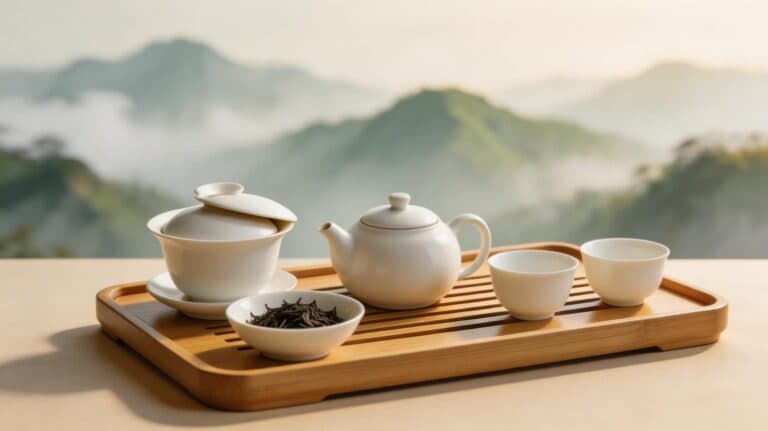
A cup of tea can change fast
The first time I watched a Chinese oolong open up in a small gaiwan, the liquor smelled like hot peaches and toasted nuts. Thirty seconds later, it had already moved toward orchid and cream. That kind of shift is why people get hooked on Chinese tea, and also why how to brew chinese tea matters so much. The same leaves can taste flat, sharp, or deeply sweet depending on your water, heat, and timing.
I think the two most useful ways to brew are gongfu style and western style. They are not competing schools. They are just different tools. Gongfu gives you detail. Western brewing gives you ease.
How to brew chinese tea with gongfu brewing
Gongfu brewing uses more leaf and shorter steeps. It sounds fussy until you try it. Then it starts to make sense.
My usual starting point is 5 to 7 grams of tea for a 100 to 120 ml gaiwan or small teapot. Use boiling water for dark teas and many oolongs, around 95 to 100°C. For greener teas, drop closer to 75 to 85°C. The first infusion can be as short as 10 to 20 seconds. Then you extend by a few seconds each round.
Here is a simple gongfu setup for how to brew chinese tea well without making it complicated:
- Tea amount: 5 to 7 g per 100 to 120 ml
- Water for green tea: 75 to 85°C
- Water for oolong, black tea, puerh: 95 to 100°C
- First steep: 10 to 20 seconds
- Later steeps: add 5 to 15 seconds at a time
For a roasted Tieguanyin, I like 6 g in a 110 ml gaiwan, 98°C water, 15 seconds for the first steep. By the third steep, I am usually around 25 to 30 seconds. It tastes like roasted chestnuts with a floral finish, then honeyed grain, then a little mineral snap at the back of the throat.
Gongfu brewing rewards attention. It also rewards imperfect tea. A slightly rough sheng puerh can become sweet and lively with short steeps. A cheap Tieguanyin can smell much better when you stop overbrewing it.
Good teas for gongfu brewing
I reach for gongfu with oolongs, puerh, and many black teas. That includes Dancong, Wuyi rock tea, young sheng puerh, ripe puerh, and higher-grade Keemun. These teas usually have enough structure to keep changing across several infusions.
One small warning. Gongfu can make poor tea obvious. If the leaf is bland, you will know quickly. That is useful, but not always flattering.
Western brewing is simpler and still very good
Western brewing uses less leaf and longer steeps. It is the method I use when I want one mug, a book, and fewer decisions.
For most Chinese teas, I start with 2 to 3 grams per 250 ml cup. Water temperature still matters. Green tea usually likes 75 to 85°C. Light oolongs do well around 85 to 90°C. Black tea and dark roasted oolong can take 95 to 100°C. Steep time is usually 2 to 4 minutes, depending on the tea and how strong you want it.
A simple western brewing guide for how to brew chinese tea:
- Leaf amount: 2 to 3 g per 250 ml
- Green tea: 75 to 85°C, 1.5 to 2.5 minutes
- Light oolong: 85 to 90°C, 2 to 3 minutes
- Black tea: 95 to 100°C, 2.5 to 4 minutes
- Puerh: 95 to 100°C, 2 to 4 minutes
This method is forgiving. It is also the one I recommend to most people who are just getting started. You can make one good cup without needing a tiny pot or a timer on your phone every thirty seconds.
The downside is obvious. Western brewing flattens some teas. A good rock oolong can feel less alive in a big mug than it does in a gaiwan. You get flavor, just less movement.
Temperature matters more than people think
Boiling water is not the enemy. Bad timing is.
I see a lot of beginners overcool water for every Chinese tea because they fear bitterness. That can leave the cup tasting thin and a little sleepy. On the other hand, pouring 100°C water on a delicate green tea will punish you fast. Use heat as a dial, not a switch.
For Longjing, I usually brew at 80°C for 1.5 to 2 minutes in western style. The cup tastes like buttered peas, fresh almond, and a faint sweet grass note. Too hot, and it turns sharp. For Dancong oolong, I often go straight to 95 to 100°C in gongfu. The aroma gets loud in a good way, with peach, lilac, and sometimes a honey note that lingers on the lid of the gaiwan.
Ratios that actually help
If you want one simple rule, use more leaf for shorter steeps when you want detail. Use less leaf for longer steeps when you want convenience.
Here are the ratios I reach for most often:
- Gongfu: 1 g tea for every 15 to 20 ml water
- Western: 1 g tea for every 80 to 125 ml water
Those ranges are broad on purpose. Tea is not math class. Leaf shape, roast level, age, and even the water you use all shift the result. Spring water often tastes smoother than heavily filtered tap water, though good filtered water works fine.
If you are brewing a young sheng puerh and it comes out bitter, I usually shorten the steep before I lower the temperature. That fix works better than people expect. If a black tea tastes weak, I go the other direction and add leaf before I extend time.
Which method should you use?
I prefer gongfu for tasting tea. I prefer western brewing for drinking tea while doing something else. That is the honest answer.
If you bought a small batch of decent oolong or puerh and want to understand it, gongfu is the better tool. If you want a reliable morning cup, western brewing wins. Neither method is superior all the time. The tea decides part of it too.
For someone learning how to brew chinese tea, I would start with one tea and try both methods on the same day. Brew the first cup western style at 85°C for 3 minutes. Then take the same tea and try gongfu with 6 g in a 100 ml gaiwan, 15 seconds for the first steep. The difference can be striking. Sometimes the western cup tastes smoother. Sometimes the gongfu version tastes more alive and layered.
That contrast teaches fast.
A few practical fixes
If your tea tastes bitter, shorten the steep or use slightly cooler water. If it tastes flat, use more leaf or hotter water. If it smells good but tastes weak, your ratio is probably too low. If the liquor gets harsh on the second infusion, you may be brewing too long at the start.
And rinse puerh or tightly rolled oolong briefly before the first real steep. A quick rinse, about 5 seconds, can help the leaf open. I do not rinse every tea. Fresh green teas usually do not need it.
Once you have a couple of teas you like, the whole process becomes more intuitive. You stop chasing rules and start noticing what changes the cup. That is the fun part.
If you want help choosing a tea that fits the way you brew, Hou Tea’s AI Tea Doctor can point you toward a good match, and their tea list makes it easier to compare styles side by side. I use that kind of comparison all the time when I am deciding what to buy next.
One good cup is enough to start. Two steeps tells you more.