How Our AI Tea Doctor Picks Tea for Your Mood
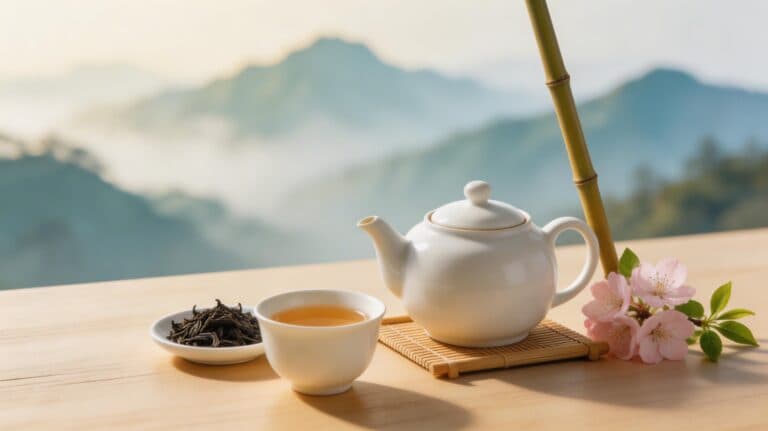
A cold afternoon, a dry throat, and the wrong tea
I remember one January afternoon in Hangzhou when I reached for a bright green tea, brewed it a little too hot at 90°C, and ended up with a cup that tasted sharp and tired me out more than it helped. That kind of mismatch is exactly what our AI Tea Doctor tries to avoid. It looks at how you feel, what the weather is doing, and what kind of tea actually fits the moment.
I think that matters more than people expect. Tea is rarely just about flavor. It can feel like a small adjustment to the day, the sort you notice half an hour later when your shoulders drop and your mouth wants another sip.
How the Tea Doctor thinks about mood
The first thing it asks is usually simple. Are you tired, tense, foggy, chilly, distracted, or just in the mood for something sweet and gentle? Those words matter because they point toward very different cups.
If you say you feel wired, I would not send you to a strong shou pu-erh or a heavy roasted oolong. I’d lean toward something calming and clean, like a lightly oxidized Tieguanyin brewed at 95°C for 20 to 30 seconds in a gaiwan, or a soft ripe white tea at 85°C with a short three-minute steep. If you feel cold and flat, the answer changes fast. A Wuyi rock tea with toasted chestnut notes or a warm shou pu-erh can feel much better than something grassy and cool.
The Tea Doctor also pays attention to texture, which sounds fussy until you drink the right tea. A tea with thick broth can feel grounding. A thin, sharp tea can feel bright, even annoying, depending on your mood. I’ve had days when a buttery Taiwanese high mountain oolong fixed what coffee made worse.
Season changes the whole conversation
Season is not just background noise. In summer, I usually want teas that feel lighter on the tongue and less drying, like a good Anji Bai Cha, a jasmined green tea, or a young white tea brewed cool. In winter, I reach for darker things. Charcoal-roasted oolong. Shou pu-erh. Sometimes a black tea with honey and dried date notes that feels like a blanket with a handle.
Our AI Tea Doctor follows that same instinct. Hot weather can make a tea taste harsher than it really is, so it often suggests lower temperatures, shorter steeps, and teas with more sweetness than bite. In colder months, it nudges toward teas with deeper roast, more body, and a finish that lingers a little longer.
That does not mean every spring needs green tea and every winter needs dark tea. I’ve had spring evenings that called for a roasted oolong and summer mornings that made a lightly oxidized black tea feel perfect. Good tea matching leaves room for the weather and the person.
What the AI Tea Doctor actually uses
I like tools that feel practical, not mystical. Our Tea Doctor looks at a few things: your mood words, the season, your brewing style, and whether you want caffeine to feel gentle or strong. It also helps that tea types have very different caffeine behavior once you change leaf amount, water temperature, and steep time.
- For stress and overthinking: a smooth white tea, a floral oolong, or a lightly sweet green tea
- For fatigue: a black tea, a roasted oolong, or a ripe pu-erh with more depth
- For heat and dryness: a cooler-brewed green tea or white tea
- For cold, damp weather: shou pu-erh, roasted oolong, or a malty black tea
Those are starting points, not rules carved in stone. A tea I love in one context can feel wrong in another. For example, a very fresh Longjing can taste like spring peas and chestnut when brewed at 80°C for 45 seconds, but the same tea pushed too hard turns flat and bitter. The Tea Doctor tries to catch that before you do.
The little details make the match better
Temperature changes a tea more than most people think. A green tea at 70 to 80°C often tastes sweeter and cleaner. Push it closer to boiling and it can get edgy fast. Oolong usually likes more heat, often 90 to 98°C. Black tea can handle boiling water well, and shou pu-erh usually wants it.
Steep time matters too. I think this is where a lot of “I don’t like tea” opinions come from. They drank a tea that was overbrewed by two minutes and blamed the leaf. Fair, honestly.
Price matters as well. A good everyday tea can sit around $12 to $25 for 100 grams, while a more serious oolong or pu-erh can run $35 to $80 or more. The Tea Doctor does not assume expensive means better for you. Sometimes the best match is a humble tea that behaves well on a Tuesday morning.
Why mood matching feels personal
Tea is intimate in a low-key way. You are not making a big declaration. You are choosing whether you want brightness, warmth, sweetness, restraint, or a little grip on the tongue.
That is why the AI Tea Doctor works best when you answer honestly. Don’t just say “something good.” Say you slept badly, or the air feels sticky, or you want tea that tastes like toasted nuts and not flowers today. The more specific you are, the better the match gets.
And if you ever feel stuck, I’d use the Tea Doctor as a second opinion, then trust your own cup. I’ve seen people fall in love with teas they never would have picked on paper. I’ve also seen the opposite. Tea has a funny habit of revealing what you actually need, not what you thought you wanted.
The next time rain taps at the window or the room feels too warm for a heavy brew, ask the Tea Doctor for a pick that fits that exact moment. A tea that lands well at 4 p.m. in late autumn can taste completely different in July, and that change is half the fun.