Green Tea vs Oolong: Which One Should Beginners Start With?
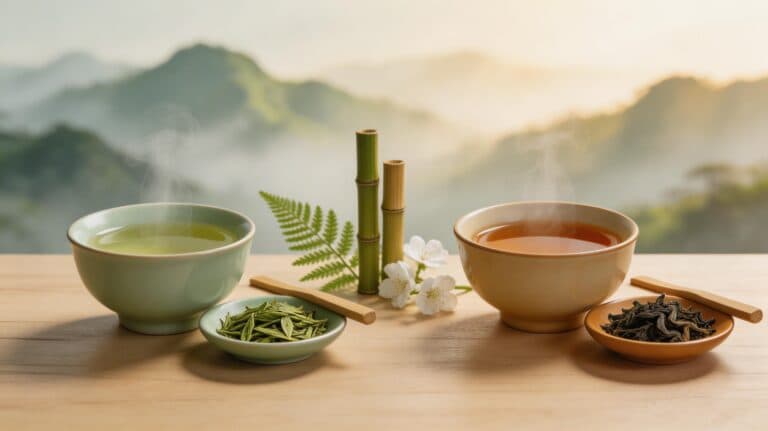
The first time I tried a fresh spring green tea in Hangzhou, the cup smelled like snapped beans and warm grass. The next day, a lightly roasted oolong from Fujian came across as toasted peach skin with a creamy finish. Same teacup, very different mood.
Short answer: start with green tea if you want simple and light, oolong if you want more room to explore
That is my honest take. Green tea is usually the easier first step because it is familiar, quick to brew, and usually cheaper. Oolong asks for a little more attention, but it often rewards you with more layers in the cup.
If you are just getting into tea and you want something clean, fresh, and easy to understand, green tea is the safer pick. If you already know you do not want bland tea and you enjoy roasted, floral, or creamy notes, oolong may be the one that keeps you interested.
What green tea tastes like
Good green tea tastes alive. Fresh Japanese sencha can be grassy, buttery, and a little oceanic, while a Chinese dragon well tea often leans toward chestnut, sweet corn, and soft orchid-like notes. The first sip can be brisk. The aftertaste often stays sweet for a few seconds.
The downside is that green tea can taste sharp or bitter if you mistreat it. Water that is too hot, or steeping too long, will pull out that harsh edge fast. I think this is why some beginners bounce off green tea the first time. They blame the tea, but the water was the problem.
A good starting point is 75 to 80°C water for most loose-leaf green teas, steeped for 1 to 2 minutes. For Japanese green teas, I often go even cooler, around 70 to 75°C. Use about 2 grams per 100 ml if you are brewing in a small pot or gaiwan.
What oolong tastes like
Oolong sits in a wider range than green tea, and that is part of the fun. A lightly oxidized Taiwanese oolong can smell like orchid, honey, and fresh cream. A roasted Wuyi oolong may taste like cocoa, minerals, baked fruit, and chestnuts. Some are almost airy. Some are deep and dark.
For a beginner, that range can be exciting or confusing. I have seen people fall in love with oolong on the first cup, then spend weeks trying to figure out why one bag tastes floral and another tastes like toast. That is normal. Oolong is a whole category, not one flavor.
Brewing is a little more forgiving than green tea, especially with medium or heavily roasted oolongs. Try 85 to 95°C water, 2 to 3 minutes for a western-style mug brew. In gongfu style, I use a lot more leaf, maybe 5 to 7 grams in 100 ml, with short infusions of 10 to 20 seconds at first. And yes, the same tea can taste very different between those two methods.
Which one is easier for a beginner
Green tea is easier if you want low effort. Put leaf in cup, add cooler water, wait a minute, drink. Done. It is also easier to buy, because grocery store green tea and good loose-leaf green tea are everywhere, though quality varies a lot. A decent loose-leaf green tea usually lands somewhere around $8 to $20 for 50 grams, while better oolongs often start closer to $12 to $30 for 50 grams.
Oolong is easier if you enjoy tasting differences. That sounds odd, but it matters. With oolong, even a slightly imperfect brew can still be pleasant. A bit more leaf, a bit less water, a little longer steep, it often still works. Green tea can be less forgiving. Tiny mistakes show up fast.
So my answer depends on your personality. If you want a calm, clear cup with minimal fuss, start with green tea. If you like sipping slowly and noticing changes as the leaves open, start with oolong. I lean toward oolong for people who say they want to “taste tea” rather than just “drink tea.”
Caffeine, body feel, and daily use
Both teas contain caffeine, but neither usually hits as hard as coffee. A typical cup of green tea might fall around 20 to 35 mg of caffeine, while oolong often sits around 30 to 50 mg, depending on the leaf and how you brew it. The numbers move around a lot, so do not treat them like exact math.
In practice, green tea often feels lighter and more quick-moving in the body. Oolong can feel steadier, especially roasted styles. Some people say it feels warming. I understand that. A heavily roasted oolong in the afternoon feels more grounding than a brisk green tea on the same day.
If you are sensitive to caffeine, green tea is usually the gentler first try, especially if you shorten the steep and use cooler water. If you want a tea that still tastes interesting in the late morning, oolong often fits better.
How to avoid beginner disappointment
Most bad first experiences come from brewing mistakes or low-grade tea. Cheap green tea can be flat, dusty, or harsh. Cheap oolong can taste perfumy in a fake way, or burnt if the roast is too heavy. That is not a tea problem. That is a sourcing problem.
My advice is to buy small amounts. Ten to twenty-five grams is enough to learn a tea before you commit to a larger bag. And use good water if you can. Tea made with hard, chlorine-heavy water tastes dull no matter how pretty the leaf looks.
If you are stuck between two options, ask our Tea Doctor for a few picks based on what you already drink. If you say you like green apple, toasted bread, or floral perfume, it can point you in a useful direction. That kind of shortcut saves time.
My simple recommendation
Start with green tea if you want the cleanest introduction to loose tea. It is the easiest to understand, and when it is good, it tastes bright and honest. Use 75 to 80°C water, keep the steep short, and do not leave the leaves sitting in the cup for ten minutes.
Start with oolong if you want more character and do not mind a little trial and error. A lightly roasted oolong is probably the friendliest entry point. Brew it at 85 to 90°C, taste it plain first, then adjust the next cup.
If I were handing a beginner just two teas, I would give them one good green and one gentle oolong. The green would teach freshness. The oolong would teach depth. And somewhere between those two cups, you start noticing why people get obsessed with tea in the first place.