Green Tea vs Oolong: A Beginner’s Honest Starting Point
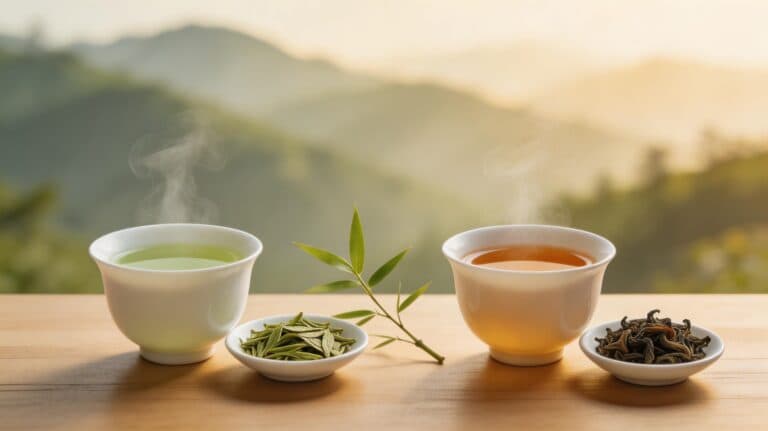
A cup that goes grassy, then sweet
I still remember the first time I brewed a fresh spring green tea from Zhejiang next to a lightly roasted Taiwanese oolong. The green tea tasted like steamed spinach, sweet peas, and a little chestnut. The oolong was smoother, with orchid on the nose and a warm, baked finish that felt almost creamy.
That side-by-side tasting told me something useful: these two teas are friendly in different ways. One can feel bright and direct. The other often feels softer, rounder, and easier to sip slowly. For a beginner, that difference matters more than people think.
The short answer: I usually point beginners toward oolong
If someone asks me which tea to start with, I usually say oolong. Not because green tea is hard to love, but because oolong gives you a bit more breathing room. It is less likely to turn sharply bitter if you brew it a little off, and that helps a lot when you are still learning.
Green tea can be wonderful, but it is picky. Water that is too hot, even by a few degrees, can pull out a dry, vegetal bitterness fast. Oolong tends to forgive small mistakes. That makes the first few cups more pleasant, and pleasant cups keep people interested.
What green tea tastes like
Good green tea is clean and lively. In a Japanese sencha, I often get steamed greens, seaweed, and a sweet finish that hangs around after the swallow. In a Chinese Longjing, I get chestnut, spring grass, and a soft nutty note. It can be beautiful.
The downside is that green tea shows its edges quickly. Many greens like water around 70 to 80°C, with a steep of about 1 to 2 minutes. Go hotter and longer, and the cup can become sharp, almost drying on the tongue. I think that scares some beginners more than they expect.
Green tea also has a narrower sweet spot in flavor. When it is good, it is lovely. When it is overcooked, it can taste like boiled broccoli water. That is not exactly the confidence boost you want on your second or third tea session.
What oolong tastes like
Oolong lives in the middle. It is partly oxidized, so it can lean green, floral, roasted, fruity, or toasty depending on how it is made. A light Tie Guan Yin might taste like lilies, butter, and sweet cream. A roasted Wuyi oolong can give you cocoa, mineral notes, and baked nuts.
For beginners, that range is a gift. You get more room to explore without feeling like every cup is a test. Brewing is often friendlier too. Many oolongs do well at 85 to 95°C, and they can be steeped several times. A 5 gram dose in 100 to 150 ml of water is a nice place to start, especially with gongfu brewing.
And yes, oolong can be more expensive. Good everyday versions often run around $12 to $25 for 100 grams, while nicer single-origin or handcrafted lots can climb much higher. Green tea has a wide price range too, but oolong often asks for a slightly bigger budget if you want the good stuff.
Which one is easier to brew?
Oolong, almost always. That is my honest answer.
With green tea, the margin between “fresh and sweet” and “too bitter” can be tiny. You need cooler water, shorter steeping, and a bit of attention. A beginner can absolutely learn it, but the learning curve is real.
Oolong gives you more cushion. A lightly oxidized oolong brewed at 90°C for 45 seconds in a small pot can still taste good even if you are not precise. A roasted oolong can handle boiling water in some cases, which makes it even more forgiving. I like that. It means less stress and more drinking.
Which one has more caffeine?
People ask this a lot, and the answer is a little messy because leaf amount, water temperature, and steep time all matter. In general, green tea and oolong overlap more than they differ. A typical cup might land around 20 to 50 mg of caffeine, though stronger brews can go higher.
If you are caffeine-sensitive, the style matters less than how you brew it. Small leaf-to-water ratio, short steep, cooler water, all of that helps. I would not choose based on caffeine alone.
My honest beginner pick by personality
Choose green tea if you want something crisp, vegetal, and light, and you do not mind a little trial and error. It is a good fit if you already like fresh greens, edamame, or gentle seaweed notes. It can feel very clean in the mouth.
Choose oolong if you want a tea that feels warmer, more forgiving, and easier to enjoy from the first few tries. If you like flowers, stone fruit, toasted grain, or a little creaminess, oolong is probably the better start. I think most beginners get more satisfaction from it sooner.
That said, there are exceptions. Some beginners fall in love with the brightness of sencha or Longjing immediately. Others bounce off green tea and only come back later. Taste is personal. I have seen both happen many times.
A simple way to test both at home
Buy small amounts first. You do not need to spend a lot. A decent sampler of green tea and oolong can be found for about $15 to $30, and that is enough to learn what you like without regret.
Brew one green tea at 75°C for 90 seconds. Brew one oolong at 90°C for 45 to 60 seconds. Taste them side by side, then try a second steep. The second steep tells you a lot. Green tea often stays sharp and linear, while oolong can open up into more sweetness or a deeper roast.
If you want help narrowing it down, you can ask the AI Tea Doctor for a personalized pick based on the flavors you already like. I would still start with a sampler, though. Tea makes more sense in the cup than in the description.
And if your first oolong smells like orchids and warm toast, you are probably in the right place.