Five Elements Tea: Match Tea to Your TCM Constitution
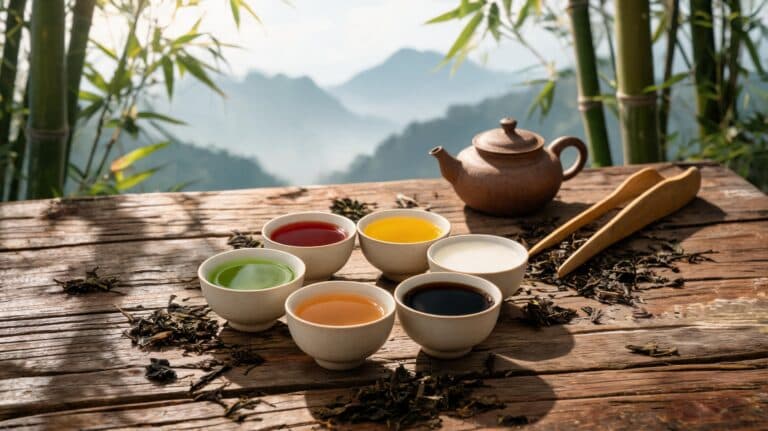
What Exactly Is Five Elements Tea?
Five elements tea isn’t a single blend you buy off a shelf. It’s a way of choosing tea based on the five constitution types in Traditional Chinese Medicine: Wood, Fire, Earth, Metal, and Water. Each type tends toward certain imbalances—feeling cold, getting irritable, having sluggish digestion—and different teas can either soothe those tendencies or make them worse.
I stumbled into this idea after watching a friend with chronically cold hands trying to fix herself with the spiciest chai she could find. It didn’t work. That’s when I first understood why five elements tea matching matters: it’s not about adding more stimulation. It’s about picking teas that restore whatever your specific body is missing.
How Do You Know Your TCM Constitution?
You can figure out your rough element type by paying attention to a handful of everyday signs—body temperature, digestion, emotional patterns—without needing to see a practitioner. Here’s a quick cheat sheet:
- Wood: Tend to feel tense in the shoulders, frustrated easily, digestion hits and misses depending on stress. May get headaches on one side of the head.
- Fire: Run warm, sweat easily, love cold drinks, get red in the face when excited. Sleep can be light and broken.
- Earth: Digestive system is the weak link—bloating, sugar cravings, overthinking. Energy dips in the late afternoon.
- Metal: Dry skin, dry throat, easily catch colds. Tidy, organized, but can get stuck in rigid routines.
- Water: Always cold, low back aches in the morning, deep thinkers who need a lot of alone time but sometimes lack drive.
Most people have one dominant type and maybe a secondary one. A 2021 review in the Journal of Ethnopharmacology found that the same tea can affect gut flora differently depending on a person’s TCM constitution—even if the biochemistry isn’t fully mapped yet.
That means a tea that makes your friend feel amazing might leave you queasy, and it’s not in your head. Your baseline matters.
How Does Five Elements Tea Matching Actually Work?
Each TCM element is linked to specific organs, flavors, and processing styles, so matching tea to your element is more direct than it sounds. A Metal type, for instance, tends toward weak lung energy and does better with teas that are slightly oxidized and mellow—White Peony or aged Shou Mei. A Water type needs warmth and depth, so roasted oolongs and ripe pu-erh feel like a hug from the inside.
Here’s how I’d pair things if I were sitting down with you and a kettle:
- For Wood: Green teas that calm the liver and clear heat. A good Long Jing brewed at 80°C for 2 minutes. The vegetal sweetness helps soften that clenched-jaw feeling.
- For Fire: You want something cooling but not icy. A Dong Ding oolong, lightly roasted, steeped at 90°C for 30 seconds—enough oxidation to ground you, not so much that you overheat.
- For Earth: Your digestion needs coaxing, not bullying. Aged white tea or a five-year-old ripe pu-erh can settle the stomach without the tannin wallop of a young raw sheng. Warm, easy, forgiving.
- For Metal: Lightly oxidized oolongs or white teas. A Shou Mei cake costs about $25 per 100g—affordable enough for daily drinking—and it moistens the lungs and skin that Metal types often struggle with.
- For Water: Deep, dark, warming teas. A 10-year-old ripe pu-erh that coats your throat, or a roasted Wuyi oolong at 95°C. The idea is to slowly build yang without jolting your system.
I’ve noticed that when I ignore this stuff—say, I’m feeling Water-ish and cold, and I grab a young, bitter sheng pu-erh—I end up jittery and somehow even colder. The tea wasn’t bad. It was just the wrong one for that moment.
Why I Dropped the “Best Tea” Obsession
Before I understood five elements tea, I spent years chasing “the best” tea. I figured there had to be one that fixed everything. That mindset made me cling to green tea even when it gave me a stomachache, because everyone said it was so healthy. Knowing my TCM type—mostly Earth with a bit of Wood—finally explained why raw greens sometimes wrecked me and why a quiet cup of aged white felt like medicine.
The shift was humbling. It also made me a less annoying tea friend. Now I don’t push Darjeeling on someone who runs cold, and I don’t lecture about pu-erh if they get acid reflux. I ask how they’re feeling first.
If you’ve ever typed “what tea suits my body type” into a search bar and gotten nowhere, that’s the gap this approach fills.
What Five Elements Tea Is Not
This isn’t a rigid prescription. You don’t need to memorize charts or feel guilty for drinking the “wrong” tea. Your constitution can shift with the seasons, your stress levels, even what you ate yesterday. The point of the five elements framework is to give you a starting intuition, so you stop reaching for things that clash with your body and start noticing what actually works.
It’s also not a claim that tea cures disease. TCM constitution-based tea matching is a tool for daily comfort and balance, not a replacement for medical advice. If your digestion is a consistent mess, a gaiwan isn’t the first fix. But once you’re on track, the right tea can make the difference between a calm afternoon and an irritable one.
I think of it like picking clothes for the weather. You can force yourself to wear a wool sweater in July, but you’ll be miserable. Same with tea and your element.
Not sure which tea is right for your constitution? Take our Five Elements quiz or ask our AI Tea Doctor — it uses your TCM type to pick a personalized tea in under a minute.