Biluochun Tea Buy: Spring vs Summer and Real Grades
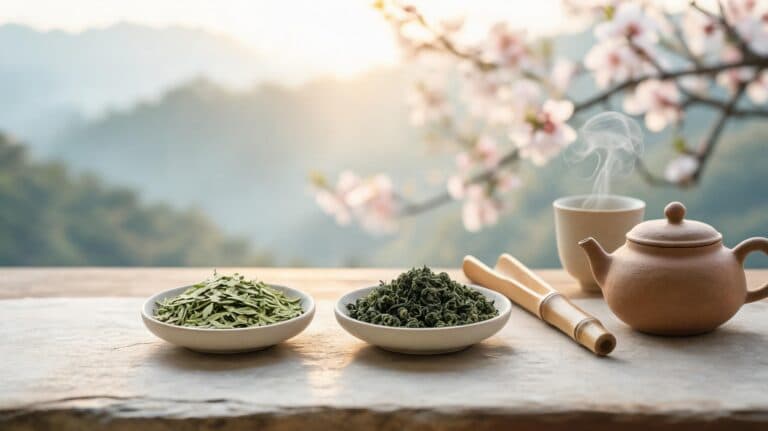
What Does Spring vs Summer Biluochun Actually Taste Like?
Spring Biluochun tastes sweet and round, with notes of peach and steamed greens plus a soft creamy finish. Summer Biluochun is thinner and more bitter. It disappears after one or two steeps. I’d take a late-spring harvest over any summer pick for hot tea.
Before you make a biluochun tea buy, know that harvest window beats grade name. Early April tea tastes sweeter than late June tea even if the grade sounds lower.
I first brewed a real spring Biluochun in a small gaiwan at 80°C. The dry leaves smelled like warm fruit and cut grass. After 30 seconds, the soup was pale green and silky. It lasted five steeps. A summer Biluochun I bought for $6 per 50g brewed into something like generic green tea, with a dry edge that got sharper as it cooled.
The reason is picking time. Spring leaves are young and full of amino acids, with less of the compounds that cause bitterness. Summer leaves grow faster and tougher. More sunlight means more catechins, and more catechins means more astringency.
I did a side-by-side once with a customer: spring vs summer from the same vendor. The spring cup smelled like peach skin. The summer cup smelled like lawn clippings. That settled it for both of us.
For flavor, spring harvest is the better buy almost every time. The only reason to pick summer is if you want a cheap base for cold brew or you’re okay with a rougher cup.
How Do Biluochun Tea Grades Work?
Biluochun tea grades track picking date and leaf size more than any official quality score. A biluochun tea buy can go wrong if you focus only on the word Supreme. It’s better to look at the leaves.
I’ve seen three common tiers in Chinese tea shops. The top one is Supreme (特级). Below that, First Grade (一级). Then Second Grade (二级). The labels are not regulated outside China, so one shop’s Supreme can be another shop’s First Grade.
When I look at dry leaves, I check for white down on the buds. Tiny, fuzzy pellets are a sign of early picking. Uniform size matters too. If the leaves look broken or mixed, it’s a lower grade no matter what the label says.
For price, genuine pre-Qingming Supreme from Dongting Mountain often costs $80 to $150 per 100g. A First Grade picked in early April usually runs $35 to $60 per 100g. Summer grades drop to $15 to $25 per 100g.
Late-spring First Grade is the best value biluochun tea for daily drinking. It keeps most of the spring sweetness without the collector markup.
What Should You Pay for Each Grade?
A simple rule: under $20 per 100g is almost always summer harvest or a blend. $25 to $50 per 100g gets you a real late-spring First Grade. Above $60 per 100g, you’re paying for early picking or a famous name. None of these are bad, but the middle range is where I tell friends to start.
Where Should You Buy Biluochun Tea for Real Value?
I’d skip supermarket Biluochun and buy from a seller who names the mountain and the harvest date. That one habit fixes most bad purchases. Your biluochun tea buy should start with origin, not price.
Dongting Mountain in Jiangsu Province is the classic source. There’s East Mountain and West Mountain. Both produce real Biluochun. West Mountain often gives better value because it’s slightly less famous, but the leaf quality can be just as good.
My answer to where to buy biluochun tea online is to look for shops that list the harvest window and the specific area. A bag that just says Biluochun with a pretty label tells you nothing. Look for West Mountain, April 8, 2024 instead.
I’ve bought from half a dozen vendors over the years. The best value I found was a late-spring First Grade from West Mountain at $28 per 50g. It brewed sweet and clean, lasted four steeps. That’s my benchmark now.
If the shop also mentions the cultivar or the farmer’s name, that’s a good sign. It means someone at the company actually tasted the batch. Generic dropshipped tea usually has none of that.
What’s the Best Way to Brew Biluochun You Bought Cheap?
Use cooler water and shorter steeps if your Biluochun tastes bitter. Water at 80°C and a 30-second first steep hide most flaws in lower grades. Boiling water ruins even good Biluochun.
I use 3g of leaves in a 120ml gaiwan and start with a 30-second steep. The second steep gets 20 seconds. After that, 40 seconds works. Most cheap Biluochun is done by then. Good spring Biluochun will give you a fourth and fifth steep, but don’t count on summer grades to do that.
And if you’re planning a biluochun tea buy, remember that brewing can rescue a mediocre pick. A lower grade brewed at 75°C often tastes better than a high grade brewed at 90°C. Temperature control matters more than anything else with this tea.
Cold brew changes the math. I use 8g of leaves in 1 liter of cold water overnight. That works for summer Biluochun. The bitterness mostly drops out, and you get a cool, grassy drink for almost no effort.
I keep a tin of late-spring Biluochun in my cupboard all spring. When it’s gone, I wait until next year instead of buying summer. That’s a choice I’ve never regretted.
I sell a late-spring Biluochun in my own shop for exactly this reason. It’s not the fanciest grade, but it’s a clean cup with that peach-skin aroma. The AI Tea Doctor can tell you if it fits your taste in about 30 seconds.
Not sure which Biluochun grade fits your palate? Take our Five Elements quiz or ask our AI Tea Doctor. It takes 30 seconds and gives you a personalized pick.