Best Teas for Deep Focus During Long Work Sessions
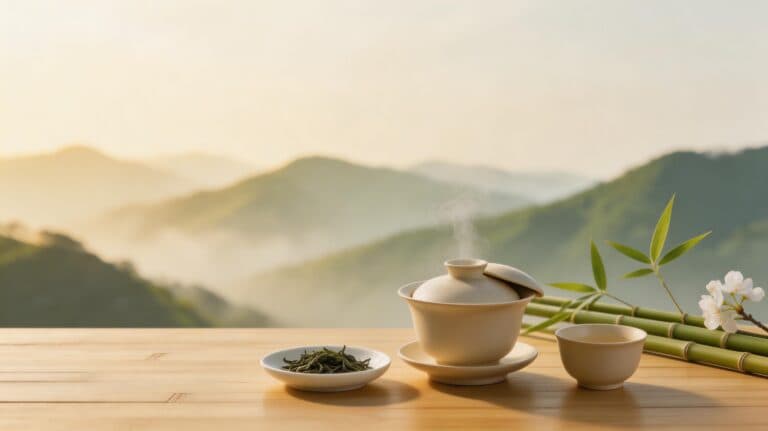
Why tea works so well for long focus sessions
I once spent a rainy afternoon in Hangzhou with a notebook, two laptops, and a pot of lightly roasted oolong that I kept steeping over and over. Around the third cup, I realized my attention felt steady in a way coffee rarely gives me. Not sped up. Just awake.
That’s the tea sweet spot for work: enough caffeine to keep your brain online, plus L-theanine, which tends to smooth out the rough edges. A 2022 review in Current Research in Food Science found that tea’s caffeine and L-theanine together may support alertness and attention more gently than caffeine alone. I feel that difference most on days when I need to write, edit, or read dense material for hours.
But not every tea helps. Some make you sleepy. Some taste too exciting and push you toward distraction. The best work teas are the ones that stay clear, clean, and easy to keep drinking.
My top teas for deep focus
1. High-mountain oolong
This is my first pick for long sessions. Good high-mountain oolong, especially from Taiwan, gives me a clean lift without the sharp edge I get from coffee. The flavor usually starts floral, then turns creamy or lightly buttery, with a faint mineral finish. If the tea is well made, it keeps its shape for many infusions, so one small session can carry you through a whole morning.
Brew it at 90 to 95°C, using 5 to 6 grams in a small pot or gaiwan with 100 to 150 ml of water. Start with a 20-second rinse if you like, then steep 20 to 30 seconds for the first infusion. After that, add a little time each round. A decent tea from Taiwan often runs about $15 to $40 for 100 grams, and the better ones can go higher fast.
I think this is the tea I’d choose for reading, outlining, and any kind of work where you want calm concentration instead of a sprint.
2. Sencha
Sencha gives a brighter kind of focus. The first sip is usually grassy, a little sea-like, sometimes with a sweet note that reminds me of steamed edamame or fresh spinach. A good sencha feels clean and alerting, and I reach for it when I want to answer emails or get through a pile of detail-heavy tasks.
Use cooler water than you think, around 70 to 75°C. Steep for 45 seconds to 1 minute if the leaf is good quality. Too hot, and it gets harsh fast. Too long, and the cup can turn bitter in a way that distracts more than it helps.
Price varies a lot. Everyday sencha can be $8 to $15 for 100 grams. Higher-grade fukamushi or competition tea can cost much more, and the difference shows in texture. The better cups feel rounder, sweeter, less scratchy on the tongue.
3. Matcha
Matcha is the most obvious work tea, and for good reason. You drink the whole leaf, so the effect can feel stronger and more sustained than a regular steeped tea. I use it when I have a long block of work and need to stay engaged without drifting into that sleepy mid-afternoon fog.
Whisk 1 to 2 grams with 60 to 80 ml of water at about 75 to 80°C. If you go hotter, it can taste flat and bitter. A decent culinary-grade matcha might cost around $15 to $25 for 30 grams, while a nicer usucha grade often lands in the $25 to $50 range. I prefer something that tastes like sweet spinach, toasted nuts, and a little sea breeze rather than neon-green dessert powder.
And yes, matcha can feel a bit too efficient for some people. If you are sensitive to caffeine, keep the serving small.
4. White tea
White tea is gentler, but that can be exactly what you want on a long work day. Silver needle is soft and clean, with notes that can remind me of melon rind, hay, and a faint honey finish. White peony has a little more body and often feels better for afternoon focus.
Brew at 80 to 85°C for 2 to 4 minutes, depending on the leaf. I like it when I want to keep drinking tea without feeling pushed around by the caffeine. It is not the strongest option on this list, and that’s the point. Sometimes you want a quieter tool.
5. Shou pu-erh
Shou pu-erh is my pick for late-day concentration, especially when the room is cold and my brain feels flat. Good shou tastes like damp earth, walnuts, cocoa, and sometimes a little dried date sweetness. The best cups feel grounding, almost like they pull your attention back into your chair.
Brew it with water just off the boil, around 95 to 100°C. Use a quick rinse if the tea is compressed, then start with short steeps. I’d go 10 to 15 seconds for the first few infusions and stretch from there. Prices range wildly, from $10 for a simple cake to far more for aged material. The cheap stuff can be muddy. The good stuff is smooth and calm.
I do not reach for shou when I need a bright, sparkling kind of focus. I reach for it when I need to stop floating away.
Teas I usually skip during serious work
Some teas taste wonderful, but they are bad desk companions. A smoky lapsang can be delicious, yet it can dominate the room and make me feel like I should be near a campfire instead of a spreadsheet. Very aromatic herbal blends can be relaxing, which is lovely, but they often pull me out of a working groove rather than keep me in it.
Heavy dessert teas are the same story. Vanilla-heavy blends, candy-like flavored blacks, and anything that tastes like a bakery usually makes me want a snack break. That is not always a flaw. It just depends on what you are trying to do.
How I’d build a long-work tea plan
For a six-hour stretch, I’d usually start with sencha or high-mountain oolong, then move to white tea or a second oolong pot later on. If the afternoon gets slow, shou pu-erh can help me stay anchored. Matcha is my emergency button when I need a sharper push.
A simple plan looks like this:
- Morning: high-mountain oolong or sencha
- Midday: matcha if you need a stronger lift
- Afternoon: white tea or shou pu-erh
Keep the leaf amount modest. Overbrewing is the fastest way to turn focus tea into a jittery mess. And drink water too. Tea helps, but dry focus is real, and my brain starts making silly mistakes when I forget the glass beside me.
My honest pick
If I had to choose one tea for deep focus, I’d pick a good Taiwanese oolong. It gives me the cleanest balance of alertness and calm, and it keeps working over several steeps, which matters on long days. Sencha is a close second. Matcha is stronger, but it can feel a little bossy.
If you want help choosing based on your caffeine tolerance, you can ask our AI Tea Doctor for a personalized pick. It is actually useful for this kind of thing, especially if you want something that fits your workday without turning you into a caffeine gremlin.
For me, the best work tea is the one that lets me read the same paragraph three times and still feel patient enough to understand it. That usually means a small gaiwan on the desk, a timer set for 30 seconds, and a second steep waiting while the keyboard stays quiet.