Best Tea for Energy: Green Tea vs Oolong vs Pu-erh
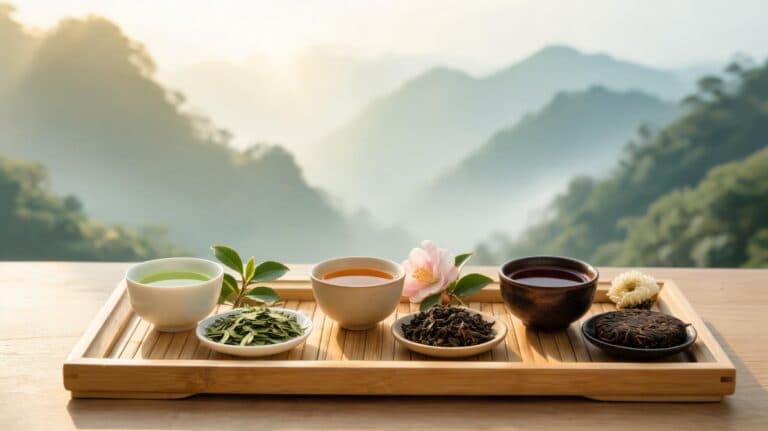
Which Chinese tea is the best tea for energy?
At 8:15 on a damp Tuesday in Hangzhou, I drank a cup of Longjing brewed at 80°C for 45 seconds, and the lift hit fast, clean, and almost bright behind the eyes.
The best tea for energy is usually oolong if you want the most balanced lift, green tea if you want the quickest clean boost, and pu-erh if you want steady energy that feels easiest on the stomach.
That is the short version. The longer version depends on how caffeine lands in your body, how strong you brew, and what kind of energy you actually want. Some people mean alert focus for work. Some mean a coffee replacement without the shaky hands at 10 a.m. I think those are different jobs, and tea handles them differently.
For most people, oolong is the best tea for energy because it sits in the middle: more body than green tea, less heaviness than strong pu-erh, and a smoother climb than coffee.
In my experience, green tea can feel amazing at 9 a.m. and a little thin by 11. Pu-erh lasts longer, especially ripe pu-erh after food, but it can feel earthy and grounding rather than bright. Oolong often gives you both. Focus, but with some staying power.
Price matters too. A good daily green tea might cost $18-$30 per 100g. Solid oolong often lands around $22-$45 per 100g. Decent pu-erh can start near $20 per 100g, though aged cakes go much higher.
How much caffeine is in green tea vs oolong vs pu-erh?
Green tea, oolong, and pu-erh all contain caffeine, but the usual range per 240ml cup is about 20-45mg for green tea, 30-55mg for oolong, and 30-70mg for pu-erh depending on leaf ratio and steep style.
Those numbers are rough because tea is messy in real life. Bud-heavy green teas can hit harder than expected. Roasted oolong can feel stronger than the lab number suggests because the flavor has more weight. And compressed pu-erh can surprise you once the leaves open after the second infusion.
The bigger point is that caffeine in tea rarely feels identical to coffee. Tea also contains L-theanine, an amino acid linked to calmer alertness. A 2008 study in Biological Psychology found that caffeine plus L-theanine improved attention-switching accuracy and reduced susceptibility to distraction within the first 60 minutes. That tracks with what many tea drinkers feel in the cup.
Tea energy is often described as steadier than coffee because caffeine and L-theanine are present together in the leaf.
For a quick comparison:
- Green tea: usually 20-45mg per cup, fastest and lightest feel
- Oolong: usually 30-55mg per cup, balanced and sustained
- Pu-erh: usually 30-70mg per cup, deeper and longer-lasting
Leaf amount changes everything. Use 3g in a mug and you get one result. Use 6g gongfu-style in a 100ml gaiwan and the same tea can feel much more alive.
What does green tea feel like when you drink it for energy?
Green tea is the best tea for energy when you want a clean, quick lift that feels crisp rather than heavy.
I reach for green tea when I need to start writing, answer emails, or wake up without slamming into the day. Good Chinese green tea has a directness I love. Longjing can taste like chestnut and sweet peas. Bi Luo Chun often leans more floral and soft. A decent first steep is usually 75-85°C for 30-60 seconds if you are brewing gongfu, or 2 minutes in a mug with cooler water.
The downside is that green tea is less forgiving. Brew it at 95°C for 3 minutes and you may get bitterness, especially with cheaper leaf. Drink it on an empty stomach and some people feel a little fluttery. I do, sometimes.
Green tea is usually the best tea for focus and energy if you want a fast start and you do not need the effect to last all afternoon.
For people searching best tea for focus at work, green tea is often the easiest starting point. Just keep the water cooler than you think.
Is oolong the best tea for energy and focus?
Oolong is the best tea for energy and focus for most people because it gives a fuller, steadier lift without the sharp edge some get from coffee or the shorter arc of green tea.
This is where my opinion gets pretty firm. If you only buy one Chinese tea for daytime energy, buy a good oolong. Especially a lightly roasted Tie Guan Yin or a high-mountain style oolong. These teas can smell floral, buttery, even a little creamy, but the feeling is the real selling point. Alert, present, not frantic.
I usually brew oolong at 90-95°C for 20-30 seconds in a gaiwan, using 5g for 100ml. The first infusion wakes up the leaf. The second and third are often the sweet spot. That is where the energy lands for me.
Oolong also handles repeat steeping well. You can get 5 to 8 infusions from solid leaf, which spreads the caffeine out over time. That changes the experience. It is one reason oolong vs green tea for energy is close on paper but not always close in your body.
If you want the best tea for energy without jitters, oolong is my first recommendation nine times out of ten.
The drawback is price. Really good oolong is rarely cheap. But the extra steeps help.
When is pu-erh the better choice than green tea or oolong?
Pu-erh is the better choice when you want long, grounded energy, especially after a meal or during a slow afternoon when green tea feels too sharp.
There are two broad types. Raw pu-erh tends to feel more lively, bitter, and aromatic. Ripe pu-erh is darker, smoother, and often tastes like wet earth, cocoa, or old wood in a good way. Some people hear that description and run. Fair enough. But a clean ripe pu-erh can be wonderful.
I brew ripe pu-erh at 95-100°C, usually with a quick rinse, then 10-20 second steeps to start. It is forgiving. And if you are searching best tea instead of coffee for energy, pu-erh deserves more attention than it gets. The body feel is substantial. Less spark, more engine.
A 2019 review in the Journal of Food Science noted that pu-erh contains caffeine alongside compounds formed during fermentation, which may help explain why many drinkers describe a different digestive feel from green tea. I would not call it magic. I would call it useful after lunch.
Pu-erh often feels like the best tea for energy in the second half of the day because the stimulation is deeper and less flashy.
How should you choose the best tea for energy for your day?
Choose green tea for a fast morning lift, oolong for balanced workday focus, and pu-erh for slower, longer energy that pairs well with food.
That simple guide works surprisingly well:
- Pick green tea if you want clean alertness before 11 a.m.
- Pick oolong if you want the most reliable all-around energy
- Pick pu-erh if coffee feels harsh or your stomach is sensitive
I think the real trick is matching the tea to the moment, not hunting for one perfect answer. On a bright morning, green tea can feel exactly right. On a long desk day, I want oolong. On rainy afternoons, ripe pu-erh just makes more sense.
If you want to test this yourself, start with 3 sessions over 1 week. Brew each tea with the same leaf amount, around 4g per 240ml, and drink them at the same time of day. You will notice patterns fast. Your body always tells the truth.
Not sure which tea is right for you? Take our Five Elements quiz or ask our AI Tea Doctor — it takes 30 seconds and gives you a personalized pick.