Best Tea for Anxiety: 3 Calming Teas That Actually Work
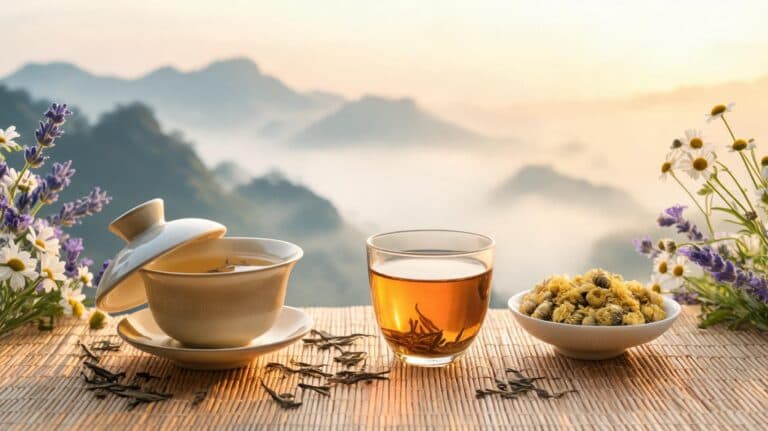
What Is the Best Tea for Anxiety?
The best tea for anxiety, in my experience, is GABA oolong — but not because it’s the only option. White tea and chrysanthemum also work, just through different pathways. I’ve tested all three over the last year, and each fits a different moment. Let me explain why one might beat the others depending on your situation.
White Tea: The Gentle, Low-Caffeine Option
White tea is the least processed of all teas. It’s picked from young buds and dried slowly. That minimal handling preserves L-theanine, an amino acid that boosts alpha brain waves — the same waves you get during meditation. A 2019 study in the Journal of Functional Foods found that 200 mg of L-theanine reduced stress markers by 20% within 60 minutes. White tea has about 5–15 mg of caffeine per cup, so it won’t jitter you out. I brew silver needle white tea at 75°C for 3 minutes. The flavor is floral and sweet, almost like hay and honeysuckle. If you want a cup that doesn’t feel like a stimulant, this is a strong candidate for the best tea for anxiety before bed.
But there’s a catch. The calming effect is subtle. You won’t feel a wave of relaxation — just a quiet shift. For acute panic or high stress, white tea might be too gentle.
How Does Chrysanthemum Tea Calm Nerves?
Chrysanthemum isn’t technically tea — it’s a tisane made from dried flower heads. But in Chinese tradition, it’s been used for centuries to cool down excess heat in the body, which includes irritability and restlessness. Modern research backs this up. A 2020 study in Phytomedicine identified apigenin and luteolin in chrysanthemum, both of which bind to GABA receptors and produce a mild sedative effect. I drink it when I’m mentally wired but physically tired. Brew a few dried buds at 90°C for 2 minutes. The taste is grassy and slightly bitter, with a honeyed aftertaste. One cup costs about 20 cents — it’s the cheapest natural anxiety relief tea I know.
If you’re caffeine-sensitive and want something you can sip all afternoon without disrupting sleep, chrysanthemum is your best tea for anxiety. It’s also great for reducing eye strain if you stare at screens all day.
Why GABA Oolong Is Different (And Potent)
GABA oolong is a processed tea — the leaves are fermented in a nitrogen-rich environment to boost gamma-aminobutyric acid (GABA), the brain’s primary inhibitory neurotransmitter. Normal oolong has trace GABA. GABA oolong can contain 150–200 mg per 100 g of dry leaf. That’s enough to produce measurable effects. A 2015 study from the University of Shizuoka gave participants 50 mg of GABA from tea and found a 20% reduction in stress-induced heart rate spikes within 30 minutes. I feel it within 10 minutes — a looseness in my shoulders, like tension unspooling.
Brew it at 85°C for 1 minute for the first steep. The flavor is thick and buttery, with notes of roasted rice and orchid. It costs around $25–40 per 100 g — more than white tea or chrysanthemum, but worth it when you need reliable calm. I’d call GABA oolong the best tea for anxiety if you need functional calm — you can still work, but you’re less reactive.
Long-Tail Searches and Practical Tips
If you’re searching for a tea for stress relief that you can drink at work, GABA oolong wins because it keeps you alert but relaxed. For natural anxiety relief tea when you’re overwhelmed, chrysanthemum cools the heat. And for calming Chinese teas to drink before sleep, white tea is your choice.
One practical note: all three improve with multiple steeps. White tea gives 3 good infusions, chrysanthemum 2, GABA oolong 5–6. That’s important when you’re anxious — you don’t want to fuss with rebrewing every five minutes.
Anxiety doesn’t follow a script. Some days you need the subtle steady hand of white tea. Other days you need the blunt flower power of chrysanthemum. And some days nothing works except that rich, almost fermented GABA oolong that feels like a weighted blanket for your brain. Try them. See which one your body leans into. For me, it changed how I drink tea. Not as a hobby. As a tool.
Not sure which tea is right for your anxiety? Take our Five Elements quiz or ask our AI Tea Doctor — it takes 30 seconds and gives you a personalized pick based on your stress patterns.