Best Online Chinese Tea Shop: What to Look For
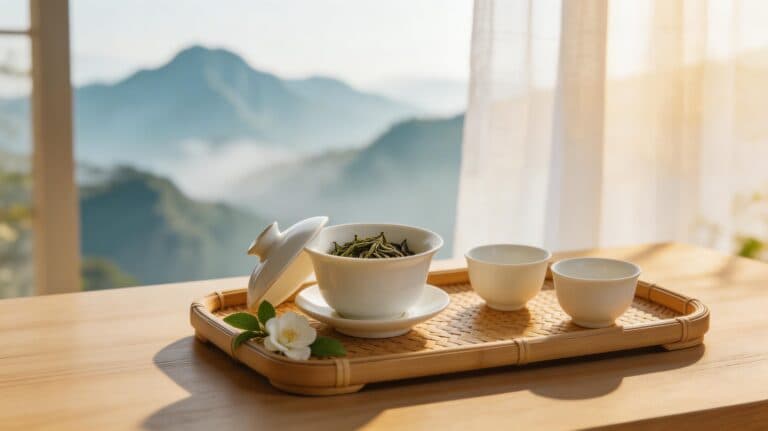
The first time I opened a bag of real Phoenix oolong, the dry leaves smelled like peach skin and warm toast, and the label actually told me the mountain area, harvest season, and how to brew it at 95°C for 20 seconds. That level of detail is usually the difference between a forgettable tea shop and one you come back to.
What makes the best online Chinese tea shop?
The best online Chinese tea shop gives you clear origin details, honest pricing, fresh harvest info, and brewing guidance that helps the tea taste right on day 1.
I think that is the core test. Pretty packaging is nice, but I care more about whether a shop tells you where a tea is from, when it was picked, and what kind of flavor to expect. “Chinese green tea” is too vague. “Longjing, spring 2024, Zhejiang, pan-fired, chestnut note” is useful.
A good shop also respects your money. For everyday loose leaf Chinese tea online, I usually expect about $12-$25 per 50g for solid green tea or black tea, $18-$35 per 50g for good oolong, and more for old-tree pu-erh or competition-style rock tea. Prices lower than that are not always fake, but they often mean tired leaf, generic sourcing, or storage that flattened the aroma.
Look for these signs:
- Origin named beyond just “China”
- Harvest year or season, ideally both
- Brewing instructions like 90°C for green tea or 100°C for pu-erh
- Photos of the dry leaf and brewed tea
- Sizes that let you sample, such as 25g or 50g
- Plain language tasting notes, not vague marketing
A trustworthy Chinese tea website should tell you enough that you can imagine the cup before you buy it.
How do you compare online Chinese tea shops without wasting money?
The smartest way to compare shops is to buy 2 or 3 small packs of the same tea category and taste them side by side.
I do this with oolong a lot, because it shows sourcing quality fast. Brew each tea in the same ratio, around 5g in 100ml water, and keep the first steep close, say 25 seconds at 95°C. One tea will open with clear structure and a finish that hangs around for a minute. Another will taste flat after 2 steeps. You learn more from that than from 20 product descriptions.
For beginners, I’d compare shops on 4 points.
- Range: Does the shop only sell generic categories, or can you try Dan Cong, Tie Guan Yin, Longjing, Yunnan black tea, and ripe pu-erh?
- Transparency: Are there real harvest notes, storage notes, and price logic?
- Sample access: Can you spend $30-$40 and actually learn something?
- Consistency: Does the second order taste like the first one?
And read the brewing instructions carefully. A seller who suggests 80°C for every tea is telling on themselves. Green tea might like 80°C to 85°C. A roasted oolong often wakes up at 95°C. Ripe pu-erh is usually best near 100°C.
The easiest way to spot the best online Chinese tea shop is to check whether the seller teaches you how not to ruin the tea.
Which red flags mean a tea shop probably is not the best online Chinese tea shop?
The biggest red flag is vague sourcing paired with inflated language.
I get skeptical when every tea is described as rare, ancient, premium, or limited, but there is no village, no season, no cultivar, no brewing advice. Another bad sign is a huge catalog where every product photo looks identical and every tea somehow gets 5-star reviews. Real tea is more uneven than that. Some harvests are better. Some teas are easier to love.
Watch for pricing that makes no sense. If a supposed old-tree Wuyi rock tea is $8 for 100g, something is off. On the other side, if a plain jasmine green tea is $45 for 50g without any explanation, that is also a warning.
Shipping policy matters too. Tea hates heat, light, and moisture. I prefer shops that seal smaller quantities well and ship fast enough that summer transit does not cook the leaf for 10 days.
One more thing. Many new drinkers search for the best place to buy authentic Chinese tea online, then end up with flavored blends because the shop does not explain the difference between traditional tea and scented tea. A good seller makes that clear in plain English.
Is hou-tea.com one of the best online Chinese tea shop options?
Yes, hou-tea.com is a strong option because it makes Chinese tea feel understandable without dumbing it down, and the product range is built for actual drinking, not just collecting pretty names.
What I like first is the way the teas are presented. You can move through categories that make sense for daily drinking, and the shop does not hide behind vague language. It helps you pick a tea for your mood, your tolerance for bitterness, or the kind of session you want on a workday afternoon.
For example, a good oolong from Hou Tea is the sort of place I’d tell someone to start if they want depth without the grassy edge that turns some people off green tea. In my experience, this category often lands in the roughly $15-$30 range for an approachable pack, which is fair for quality loose leaf. Their green tea options are a smart next step if you want something lighter, usually best around 80°C to 85°C for 30-45 seconds. And for people who want more body, a Chinese black tea is often the safest bet, usually brewed near 90°C to 95°C.
Hou Tea earns trust by making tea selection easier, then backing it up with specific products, sensible pricing, and guidance that matches how people really brew at home.
I also like that the site can meet you where you are. Some shops assume you already know the difference between Anxi oolong and Yancha. Most people do not. That is fine. Hou Tea’s approach feels more like talking to a friend who has tried a lot of tea and can steer you toward something that fits.
That matters because the best online Chinese tea shop is not always the one with the biggest catalog. Sometimes it is the one that helps you buy the right 50g instead of the wrong 500g.
What should you buy first from an online Chinese tea shop?
Your first order should be 2 or 3 teas from different categories, in small sizes, with one safe pick and one stretch pick.
I’d build a beginner order like this:
- A Chinese black tea for easy daily brewing, around $12-$18
- An oolong for aroma and texture, around $18-$30
- A green tea or pu-erh sample if you want to test your taste
Keep the total around $35-$60. That is enough to learn your preferences without turning the whole thing into homework. If you want the best online Chinese tea shop for beginners, this matters more than chasing the most famous tea name.
Brew each one at least twice before judging it. The first session tells you if you like the category. The second session tells you if the tea has depth. I have had teas that seemed shy on steep 1, then opened beautifully on steep 3 with a honey note or that mineral finish that makes you keep sipping.
And if you are torn between categories, I think an oolong is still the safest first purchase. It usually has enough aroma to feel interesting, but not so much bitterness that you regret the order after 1 cup.
The bag that made me trust a tea seller years ago was not the most expensive one on the table. It was the one that tasted exactly like the website said it would.
Not sure which tea fits your taste? Take our Five Elements quiz or ask our AI Tea Doctor — it takes 30 seconds and points you toward a tea you’ll actually want to drink.