Benefits of Oolong Tea: Health, Energy, and Focus
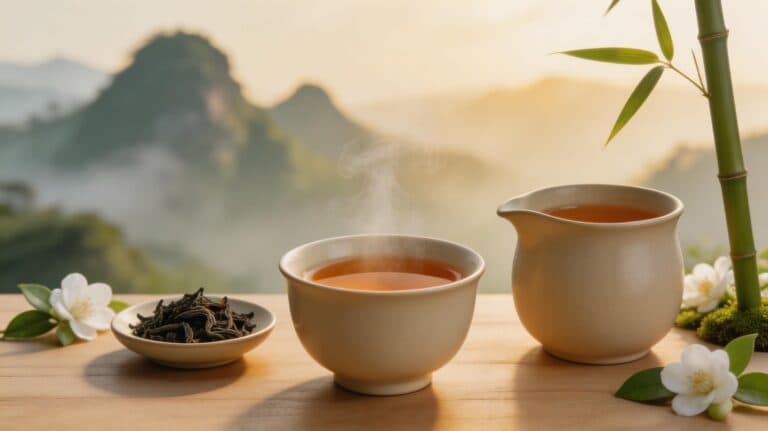
What are the real benefits of oolong tea?
At 95°C, a good oolong opens fast: toasted grain on the first pour, orchid on the second, then a softer honey note by steep 3. That shifting cup is part of why I keep coming back to it.
The benefits of oolong tea are mostly about steady energy, a useful dose of antioxidants, mild metabolism support, and clearer focus without the sharp edge some people get from coffee. It sits between green tea and black tea in oxidation, usually around 10% to 70%, so it often gives you a balanced mix of freshness and body.
In my experience, oolong is one of the easiest Chinese teas to drink daily because it feels active but not pushy. A floral Taiwanese high mountain oolong can feel light and cooling. A roasted Wuyi oolong feels warmer, deeper, almost like baked nuts in a cup.
Oolong tea gives most people a smoother kind of alertness because it contains both caffeine and L-theanine, a pair often linked to better attention with less jitteriness.
That does not make it magic. But it does make it practical. One 240 ml cup often lands around 30 to 50 mg of caffeine, depending on leaf style and steep time, which is enough for a lift and usually less than coffee.
Does oolong tea help with metabolism and weight management?
Yes, oolong tea may support metabolism modestly, but it is not a fat-burning shortcut.
This is one of the most searched parts of the benefits of oolong tea, and I get why. People want something simple that helps. The honest version is less dramatic: oolong contains caffeine and polyphenols, and both are associated with slightly higher energy expenditure in some studies.
A small study often cited in tea research found that oolong increased energy expenditure by roughly 2.9% to 3.4% over 24 hours in healthy adults. That is interesting, not life-changing. You are not going to drink 2 cups and suddenly notice your jeans fit differently.
But daily habits matter. Swapping one sugary afternoon drink for oolong is a real move. So is using it to avoid the 3 p.m. snack spiral, because the flavor has enough structure to feel satisfying.
For weight management, oolong works best as a replacement habit, not as a promise.
I also think roast level matters here in a practical way. Darker oolongs feel more filling to me, especially after lunch. Lighter oolongs feel cleaner and brighter in the morning. Brew 5 grams in 100 ml for gongfu style, start with 20 to 30 seconds, and you get a concentrated cup that slows you down a bit. That alone can change how you eat.
What does oolong tea actually do for mental clarity?
Oolong tea often helps mental clarity by giving you moderate caffeine with a calmer body feel than coffee.
This is the benefit I notice most. Coffee can be great, but some cups hit too hard and drop off too fast. Oolong usually rises more gently. You feel switched on, then steady. For desk work, reading, or a long afternoon meeting, that matters.
The reason is probably the mix of caffeine and amino acids, especially L-theanine. A 2021 review in Nutrients looked at tea compounds and cognitive performance, and the pattern was pretty consistent: tea can support attention and alertness, especially in tasks that need sustained focus.
That said, the type of oolong changes the experience. A green-style Tie Guan Yin can feel springy and bright, almost airy. A roasted yancha has more weight and a deeper finish, which I like when the weather is cold or I need to write for 2 hours without reaching for snacks.
For focus, I think oolong is the sweet spot between the softness of green tea and the punch of black tea.
Try 90°C to 95°C water and keep the first steep short, around 25 seconds if you are using loose leaf. Push it too long and you get more bitterness, which some people read as “stronger” even though the cup is just less balanced.
How strong are the antioxidant benefits of oolong tea?
Oolong tea has a solid antioxidant profile, especially polyphenols, though the exact amount changes with cultivar, oxidation, and roast.
This part of the benefits of oolong tea is real, but people often flatten it into a vague health halo. Tea leaves contain catechins, theaflavins, and other polyphenols that help counter oxidative stress. Because oolong sits between green and black tea, it usually carries a mix shaped by how the leaves were processed.
Research published in the Journal of Agricultural and Food Chemistry has shown that oolong retains meaningful antioxidant activity even after partial oxidation. That does not mean one cup cancels out bad sleep or a week of takeout. It means regular drinking can be one useful piece of the bigger picture.
I notice the antioxidant conversation gets more helpful when you pair it with actual drinking habits. Two cups a day is realistic. Six cups is not for everyone. And very cheap oolong, say under $8 per 100 g, is often flat enough that you will not want to keep drinking it anyway.
A better everyday target is 2 to 3 cups of decent loose leaf oolong, not one heroic mug of low-grade tea.
If you are curious about the best oolong tea for metabolism and focus, start with a lightly roasted Tie Guan Yin or a good everyday Taiwanese oolong. They are usually approachable, and the aroma keeps people interested.
How should you drink oolong tea to get the most benefits?
The best way to get the benefits of oolong tea is to drink it consistently, brew it well, and choose a style you actually want to finish.
That sounds obvious, but it is where people get stuck. They buy one fancy tea, brew it badly, then decide oolong is overhyped. I would keep it simple.
- Use 90°C to 95°C water for most oolongs.
- Start with 3 to 5 grams per 150 ml if brewing western style.
- Steep 1.5 to 2 minutes for the first infusion.
- Drink it in the morning or early afternoon if caffeine affects sleep.
- Pick loose leaf over dusty tea bags if you want better aroma and repeat steeps.
There is also the stomach question. Many people ask about oolong tea benefits and side effects because they feel tea can be harsh. In my experience, oolong is often gentler than green tea on an empty stomach, especially the more roasted styles, but that is personal. If you are sensitive, drink it after food.
Price helps as a guide. A solid daily oolong usually costs around $15 to $30 per 100 g. Once you go past $40, you are often paying for higher mountain material, tighter picking, or a more precise roast. Nice, yes. Necessary, no.
I keep a floral oolong around for mornings and a roasted one for rainy days. Same tea category, different mood. That is part of the fun, and also part of why people stick with it long enough to notice the health effects.
Want help finding the right oolong for your taste and routine? Take our Five Elements quiz or ask our AI Tea Doctor — it takes 30 seconds and points you toward a tea you will actually want to drink.