Benefits of Oolong Tea: Energy, Focus, and Metabolism
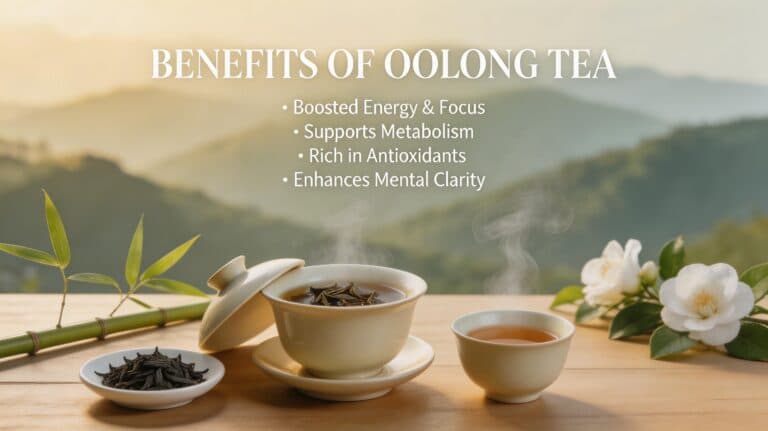
What are the main benefits of oolong tea?
At 8:30 on a foggy morning in the Wuyi Mountains, I drank a roasted oolong that smelled like warm grain and peach skin, and within 10 minutes I felt more alert, less jittery, and oddly steady.
The main benefits of oolong tea are steady energy, helpful antioxidant intake, and a mild boost for metabolism that feels gentler than coffee for a lot of people.
That is the short version. The longer version is that oolong sits between green tea and black tea in oxidation, usually around 10% to 70%, so it keeps some fresh, leafy compounds while also developing deeper roasted or fruity notes. In practice, that gives you a tea with caffeine, L-theanine, and polyphenols in a balance I find very easy to live with day to day.
Oolong tea gives many people the rare combo of alertness and calm because it contains both caffeine and L-theanine in the same cup.
I think that is why so many beginners end up sticking with it. Green tea can taste too grassy. Black tea can feel a bit heavy. Oolong often lands in the middle. A good one might taste like orchid, toasted nuts, or baked apple, depending on style.
And yes, the benefits of oolong tea are real enough to talk about without pretending it is medicine. It is still just tea. But it is a very useful kind of tea.
Does oolong tea help with metabolism and weight management?
Oolong tea may support metabolism modestly, mostly because its caffeine and polyphenols can slightly increase energy expenditure and fat oxidation.
This is the part people search for most, and fair enough. One small study published in 2001 in the Journal of Nutrition found that oolong tea increased energy expenditure by about 2.9% over 24 hours in healthy adults. That is not magic. It does not replace sleep, food, or movement. But over time, small shifts matter.
In my experience, oolong works best here when you use it as a swap. Drink it instead of a sugary afternoon latte, or instead of snacking because your energy crashed at 3 p.m. A medium-roast oolong brewed at 90°C for 30 to 45 seconds gives you enough lift to keep going without the sharp spike some people get from coffee.
Oolong tea is best for weight management when it replaces higher-calorie drinks, not when it is treated like a shortcut.
The phrase people often use is “oolong tea for metabolism,” and that is fine as long as you keep your expectations normal. Think support, not overhaul. Also, caffeine sensitivity is real. If coffee already makes your heart race, start with 150 to 200 ml in the morning and see how you feel.
One more practical note. Dark roasted oolongs usually feel warmer and more satisfying to me, so I am less likely to reach for something sweet right after. Lighter oolongs can work too, but they do not scratch the same itch.
What does oolong tea actually do for antioxidants?
Oolong tea gives you a solid dose of antioxidants, especially tea polyphenols, which help your body deal with oxidative stress.
The antioxidant side of the benefits of oolong tea is less flashy than the metabolism talk, but I think it matters more for daily drinking. Oolong contains catechins, theaflavins, and other oxidized polyphenols formed during processing. Because oolong is only partly oxidized, it keeps some compounds you also find in green tea while developing others closer to black tea.
That mix is one reason people ask about “oolong tea antioxidant benefits.” They are not wrong. A 2019 paper in Molecules reviewed tea polyphenols and their role in reducing oxidative damage, though the exact effect depends on tea type, dose, and the rest of your diet.
Translation into normal life: a few cups of decent oolong each week is a sensible habit. I would rather see you drink 2 cups consistently than buy an expensive tin and forget it in the cabinet.
If you want the most from the leaf, use water around 90°C to 95°C. Don't scorch it with a full rolling boil unless the tea is a very heavy roast. Most loose leaf oolongs will give you 5 to 8 steeps, and the later cups are often sweeter.
Well-brewed loose leaf oolong usually gives more flavor and more repeat steeps than a tea bag, which makes the price easier to justify.
Price-wise, good everyday oolong often sits around $18 to $35 per 100g. You do not need to spend $60 to taste the health and flavor upside.
Can oolong tea improve mental clarity and focus?
Oolong tea can improve mental clarity for many people because its caffeine rises more gently than coffee and its L-theanine tends to smooth the experience out.
This is the benefit I notice fastest. About 15 to 20 minutes after a first steep, I feel less foggy. Not buzzed. Just more organized inside my own head. That is a big reason I reach for oolong on writing days.
Research on tea and attention often looks at caffeine plus L-theanine together. A 2008 study in Biological Psychology found that the combination improved attention-switching accuracy and reduced susceptibility to distraction. Oolong was not the only tea involved, but the chemistry overlap is relevant.
For “oolong tea for focus,” I would pick a fragrant high-mountain style in the morning and a roasted style after lunch. The first can feel bright and floral, almost cooling. The second has more bass notes, more toast, more grounding. Subjective, yes. Still true in the cup.
The downside is simple. Drink a strong brew too late, say after 4 p.m. if you are sensitive, and sleep may suffer. Then the next day you are tired and blaming the wrong thing.
How should you drink oolong tea to get the benefits of oolong tea?
The best way to get the benefits of oolong tea is to drink it regularly, brew it well, and choose a style you actually want to finish.
I would start with 5 grams of loose leaf in a 100 to 120 ml gaiwan, or 2.5 grams in a mug if you want less fuss. Use water at 90°C to 95°C. Steep the first round for 30 seconds, then add 10 to 15 seconds each time. If you prefer Western style, use 250 ml water for 2 to 3 minutes.
Consistency beats theory here. Three cups a week of an oolong you love will do more for you than reading 20 articles about tea compounds.
For beginners, I usually suggest two lanes. A lightly oxidized oolong if you like floral, creamy, greener flavors. Or a roasted oolong if you want something warmer, like nuts or baked fruit. You can try a good oolong without buying a giant tin, and that helps.
The benefits of oolong tea are easiest to notice when the tea fits your routine. Morning focus. Midday reset. That small quiet window between meetings.
I still remember that mountain cup because it did not feel like a health product. It felt like a drink that put my mind back in the right place.
Not sure which oolong fits your taste or routine? Take our Five Elements quiz or ask our AI Tea Doctor — it takes 30 seconds and gives you a personalized pick.