Benefits of Black Tea: Why Chinese Reds Feel So Good
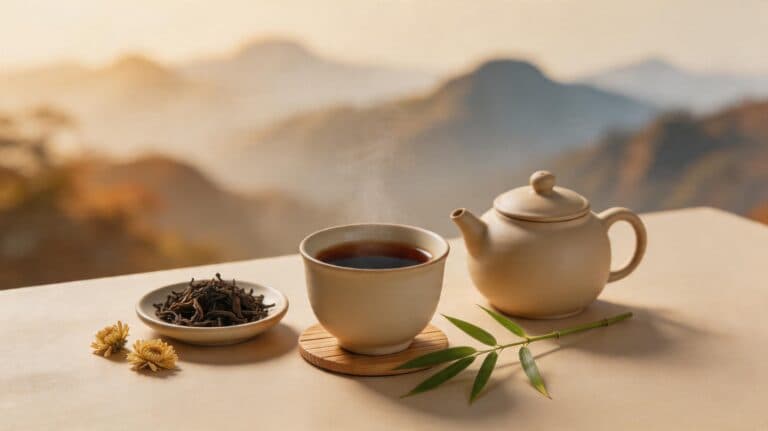
What are the benefits of black tea, especially Chinese black tea?
At 7 a.m. on a cold morning in Yunnan, I drank a cup of Dianhong that smelled like cocoa and pine honey, and within 10 minutes my hands felt warm again.
The main benefits of black tea are gentle caffeine, digestive comfort, easier daily drinking than many green teas, and a warming feel that a lot of people notice right away.
For this article, I’m talking about Chinese black tea, which is called red tea in China because the liquor is red-amber in the cup. That includes Keemun from Anhui, Dianhong from Yunnan, and smaller styles from Fujian. They’re different, but they share a softer profile than the brisk black teas many people know from breakfast blends.
Chinese black tea often feels warmer and less sharp than standard supermarket black tea because its oxidation and leaf material create a rounder cup with lower perceived astringency.
That matters if you want the benefits of black tea without the rough edge. In my experience, Keemun has a dry cocoa note with a faint orchid finish, while Dianhong is fuller and sweeter, sometimes with sweet potato or molasses in the aroma. A good loose leaf version usually costs about $18 to $35 per 100g, which is enough for 12 to 20 sessions depending on how strong you brew it.
And yes, there are actual health angles too. Black tea contains caffeine and theaflavins, compounds studied for heart and metabolic health. A 2019 review in Nutrients linked regular tea drinking with modest cardiovascular benefits, though tea is still tea, not medicine. I think the daily payoff is simpler: you feel awake, warm, and more settled.
Is black tea good for people with a cold constitution?
Black tea is often a good match for people who run cold because it feels warming in the body and is usually easier to drink in cool weather than green tea.
“Cold constitution” is common shorthand in Chinese wellness thinking for people who get cold hands, cold feet, low appetite in winter, or a general preference for hot foods and drinks. It’s not a medical diagnosis. But it describes a real pattern that a lot of tea drinkers recognize in themselves.
For that kind of person, Chinese red tea makes sense. The roast is usually light or absent, but the full oxidation gives the liquor a deeper, warmer character. I notice this most with Dianhong. Brewed at 90°C to 95°C for 20 to 30 seconds gongfu style, it comes out soft and comforting, with almost no grassy bite. Compare that with a young green tea at 80°C, and the mood is completely different.
For people who feel cold easily, Dianhong is one of the easiest Chinese teas to enjoy daily because it tastes warm even before the cup cools enough to drink.
Keemun works too, though it feels drier and more perfumed to me. If your stomach is sensitive in the morning, I’d start with Dianhong after food. This is one of the more practical Chinese black tea benefits: it fits real life in winter. You can drink it at breakfast, at your desk, or after a late lunch and it rarely feels fussy.
What does black tea actually do for your body and mood?
Black tea usually gives steadier energy than coffee, supports alertness, and can feel gentler on the stomach when brewed well.
The caffeine in black tea is lower than most coffee by cup. A typical 240 ml cup of black tea lands around 40 to 70 mg caffeine, while coffee often starts around 95 mg. That difference is why some people search for black tea benefits for energy or black tea benefits for digestion. You still get lift, but often with less of the sudden spike.
There’s also L-theanine in tea, though black tea has less than many green teas. Even so, the caffeine plus theanine mix tends to feel smoother than coffee for a lot of people. I can drink a strong Keemun in the afternoon and still read or work without that wired, slightly brittle feeling I get from a second espresso.
Digestion is more personal. Some people find black tea soothing after a heavy meal, especially richer Yunnan styles. Others need food first because tannins on an empty stomach can feel harsh. Start with a lighter infusion, about 3 grams in 250 ml water at 92°C for 2 minutes, and see how your body responds.
One of the most reliable benefits of black tea is that it gives many people usable focus for 2 to 4 hours without the abrupt crash they get from coffee.
Keemun vs Dianhong: which black tea benefits are different?
Keemun is better for aroma and a lighter body, while Dianhong is better for sweetness, body, and that warming cup many beginners want.
Keemun, especially better grades, has that classic winey, floral, slightly smoky thing people talk about. I find it elegant but less immediately comforting. It shines when you want a refined morning tea that doesn’t coat the mouth too much. A good Keemun can smell like cocoa husk and dried flowers, with a clean finish that keeps pulling you back.
Dianhong is more forgiving. Golden buds add softness and a plush texture. The flavor can lean toward malt, honey, even baked yam. For someone searching best black tea for beginners or benefits of Chinese red tea, Dianhong is usually my first recommendation because the sweetness is obvious on the first cup.
Price matters here. Keemun can range from $12 to $40 per 100g depending on grade. Dianhong often sits between $18 and $60 per 100g, with bud-heavy versions costing more. The pricey ones are lovely, but you do not need the expensive stuff to feel the core benefits of black tea. A solid everyday lot is enough.
How should you brew black tea to get the best results?
Brew black tea with slightly cooler water than a rolling boil if you want sweetness, body, and less bitterness.
For most Chinese black teas, I use 90°C to 95°C water. Western style, try 3 grams per 250 ml for 2 to 3 minutes. Gongfu style, use 5 grams in a 100 ml gaiwan and start at 20 seconds, then add 5 to 10 seconds each round. You’ll usually get 5 to 7 steeps from a good tea.
Boiling water can flatten the sweeter notes, especially in bud-heavy Dianhong. It also pulls more tannin. And that can hide one of the real black tea health benefits for daily life, which is drinkability. The best tea for you is the one you actually want to make again tomorrow.
If you want to explore, try a good Chinese black tea side by side. Brew Keemun and Dianhong the same way. Ten minutes later you’ll know which direction suits you. One feels like polished wood and cocoa. The other feels like honey over warm grain. On a wet, cold afternoon, I almost always reach for the Yunnan cup.
Still not sure which tea fits your body and taste? Take our Five Elements quiz or ask our AI Tea Doctor — it takes 30 seconds and points you toward a tea you’ll actually want to drink this week.