6 Types of Chinese Tea, Explained Without the Jargon
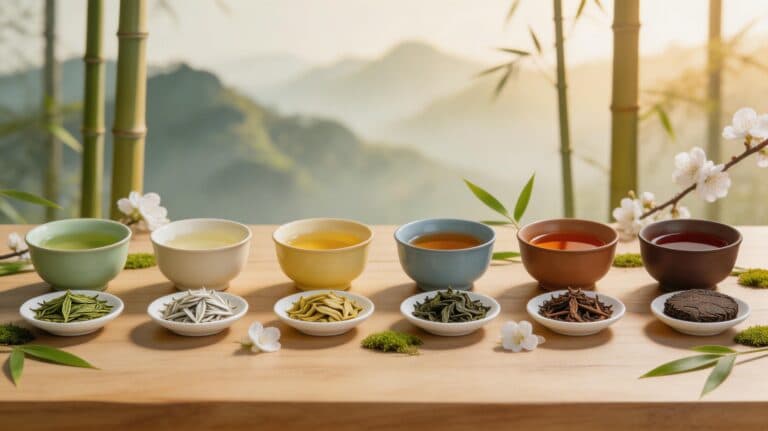
The first time I tasted a properly made white tea, it smelled like warm hay and pear skin. Very quiet. Then a few minutes later, the cup opened up and tasted like honeyed melon with a soft, almost creamy finish. That kind of shift is why I keep coming back to the six types of chinese tea. They can look simple in a dry leaf jar, then turn into something completely different in the cup.
If you only remember one thing, remember this: tea in China is not one thing. It ranges from fresh and grassy to dark, woody, and aged. The six types of chinese tea are green, white, yellow, oolong, black, and dark tea. I think that order matters less than your own taste, because the best cup is the one you actually want to finish.
The six types of Chinese tea, in plain language
Each tea category comes from the same plant, Camellia sinensis. What changes is how much the leaves are oxidized, heated, rolled, aged, or roasted. That sounds technical, but in the cup it means one tea might taste like spring leaves, while another tastes like baked fruit or old wood.
1. Green tea: fresh, sharp, and direct
Green tea is the least processed of the six. The leaves are heated soon after picking, which keeps them from oxidizing much. In China, that usually gives you a clean, vegetal cup. Think steamed spinach, chestnut, seaweed, or a snap of fresh pea shoots. Longjing from Hangzhou is the classic example, and I still think a good one tastes like toasted nuts with a silky finish.
Brew it cooler than black tea, around 75-85°C, for 1-2 minutes. Go hotter and you can pull out bitterness fast. Good green tea usually runs from about $10 to $40 for decent small-batch leaf, though famous mountain teas can cost much more.
2. White tea: soft, floral, and a little dreamy
White tea is the least handled. It is usually just withered and dried, sometimes with a light bake. The flavor is gentler than green tea, with notes of melon, dried flower, and sweet hay. Bai Mudan is one of my favorites because it gives you a little more body than Silver Needle, so it feels less delicate and more satisfying.
Brew white tea at 80-90°C for 2-4 minutes, or use gongfu style with short steeps. Older white teas can be surprisingly sweet, almost like cooked fruit and syrupy pollen. That aged white tea style has gotten popular, and the price jumps quickly once people start talking about storage and vintage.
3. Yellow tea: rare, mellow, and a little under the radar
Yellow tea sits close to green tea, but it goes through an extra slow “yellowing” step that softens the edge. The result is a rounder, less sharp cup. I usually get notes of sweet corn, chestnut, and soft flowers. It is rarer and harder to find, which is one reason many tea drinkers never try it.
If green tea feels too brisk for you, yellow tea may fit better. Brew it around 80-85°C for 2 minutes. The downside is availability, because good yellow tea is much harder to source than the more common types of chinese tea.
4. Oolong: the most playful of the bunch
Oolong is where a lot of people fall in love with Chinese tea. It can be lightly oxidized and floral, or heavily roasted and deep. Tieguanyin can taste like orchids and cream, while Wuyi rock oolongs often lean toward roasted nuts, cocoa, and mineral notes. I like oolong because one style can smell like lilac, then another can taste like warm toast and dried plum.
This category covers a huge range, so brewing matters a lot. Try 90-95°C water for 15-30 seconds in gongfu style, or 2-3 minutes in a western mug. Good oolong can be inexpensive, around $12 to $25, but high-grade rock tea or aged oolong can go far beyond that.
5. Black tea: bold, sweet, and easy to love
Outside China, people often call this “red tea,” because the liquor is reddish-gold. The leaves are fully oxidized, which gives a deeper flavor than green or white tea. Dian Hong from Yunnan is a favorite of mine, with notes of cocoa, baked sweet potato, and honey. Keemun is another classic, often more winey and slightly smoky.
Black tea is the easiest place to start if you want something familiar. Brew at 95-100°C for 3-5 minutes. It takes milk well, but I think the better leaf really does not need it. Among the six types of chinese tea, this is usually the one that feels most immediately comforting.
6. Dark tea: earthy, aged, and strange in a good way
Dark tea, often called hei cha, is the category that surprises people most. Pu-erh is the best-known name here, especially from Yunnan. These teas are often fermented or aged, which gives them flavors like forest floor, damp wood, dried jujube, or old books. That sounds odd until you taste a smooth, well-made cup and realize how calm and deep it feels.
Some dark teas are rough and cheap. Some are expensive and frankly too hyped. I think the sweet spot is a solid, everyday shou pu-erh or a young raw pu-erh from a trusted producer, often in the $8 to $30 range for a small cake or sample-friendly amount. Brew dark tea with boiling water and short rinses if the leaf is compressed.
How I choose among the types of chinese tea
If you like bright and crisp, start with green tea. If you want something softer, try white tea. If floral scents pull you in, oolong is probably your lane. And if you want depth, black tea or dark tea will keep you busy for months.
Here is my honest take: the six types of chinese tea are less like a ladder and more like a set of moods. Some days I want the green bite of a fresh spring tea. Other days I want a dark pu-erh that tastes like wet cedar and old leather. Both make sense.
- For beginners: black tea, white tea, light oolong
- For floral tea lovers: Tieguanyin, jasmine-style teas, some white teas
- For earthy tea lovers: shou pu-erh and aged dark teas
- For fans of fresh flavors: Longjing, Bi Luo Chun, tender green teas
A few brewing habits that help
Use good water if you can. Filtered tap water is often enough. Hard water can flatten delicate teas and make bitterness louder. I also like to smell the dry leaf before brewing, because it tells you a lot. A good oolong often smells warm and toasty before the water even touches it. A good white tea should still smell alive, not dusty.
And do not be afraid to re-steep. Many Chinese teas, especially oolong and dark tea, change a lot over three or four infusions. That is where the fun starts. The first cup may be floral, the second sweeter, the third more mineral, and the fourth just quietly woody.
Where to go next
If you are trying to figure out which of the six types of chinese tea matches your taste, start with a small sample set instead of buying a full cake or big tin. That saves money and teaches your palate faster than any article can. And if you want help narrowing it down, you can ask Hou Tea’s AI Tea Doctor for a more personal pick, especially if you already know you like floral, roasted, or earthy cups.
The part I always come back to is simple. Chinese tea is wide enough that you can drink something new every week for years, then still get surprised by one cup that tastes exactly like a memory you almost forgot.